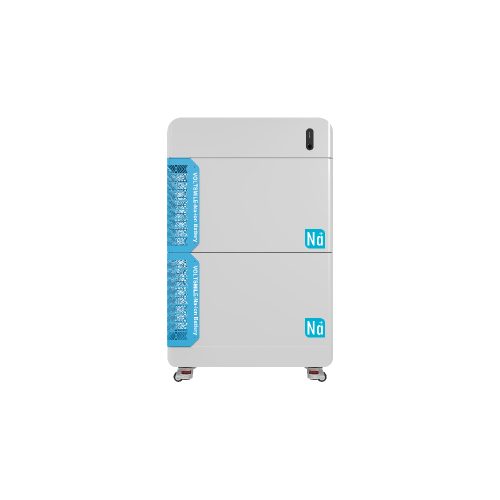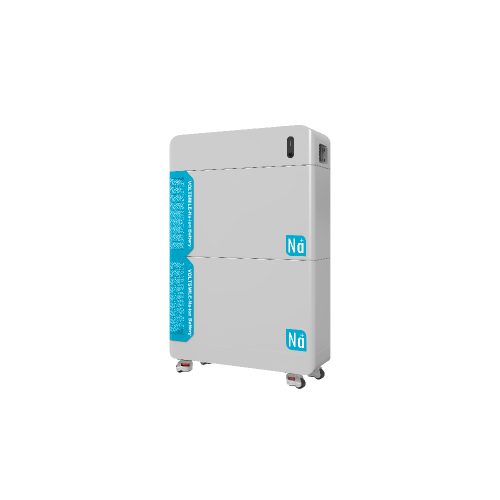


Choosing V10 for a rack-based home storage project
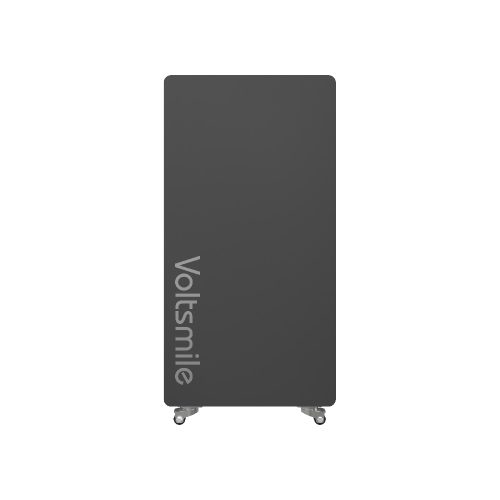
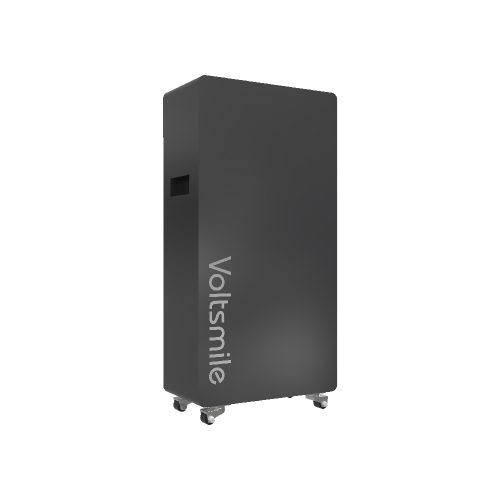
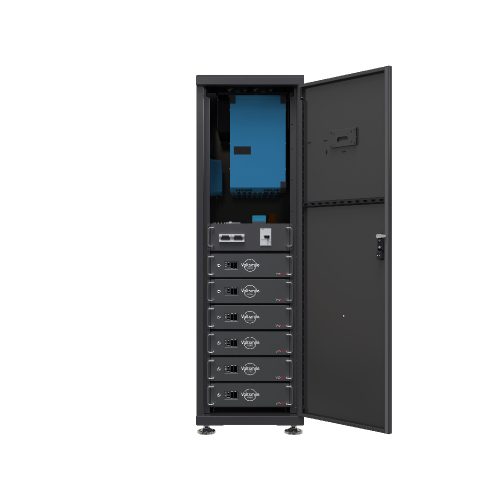
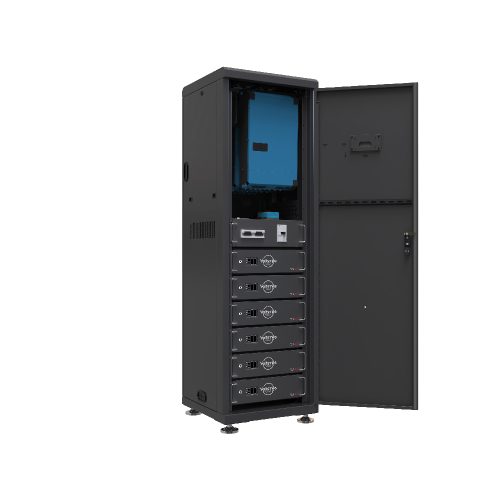
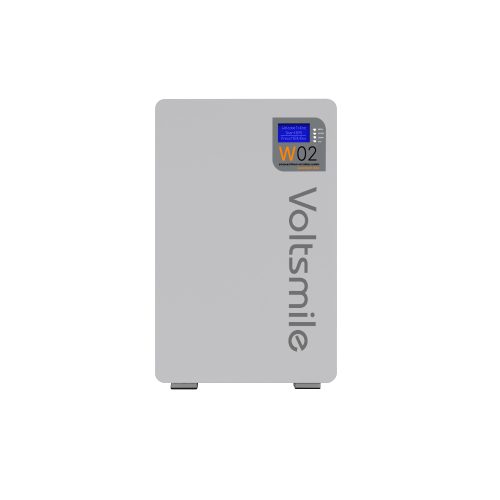
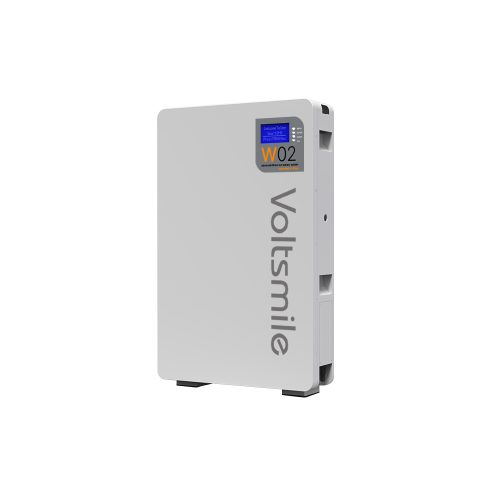
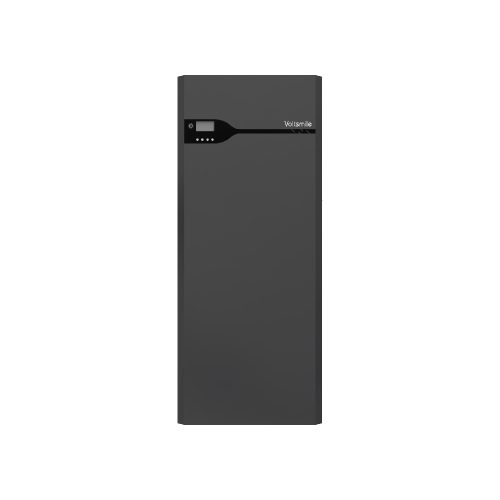
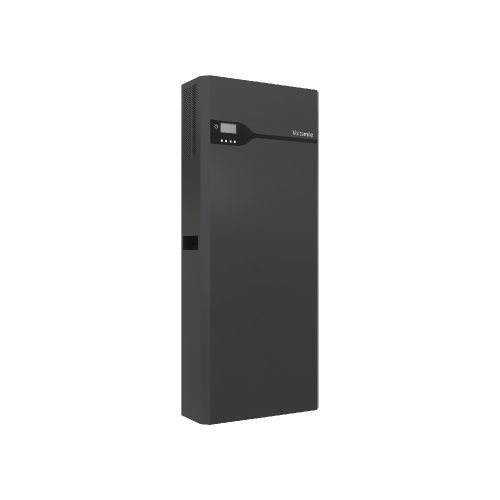
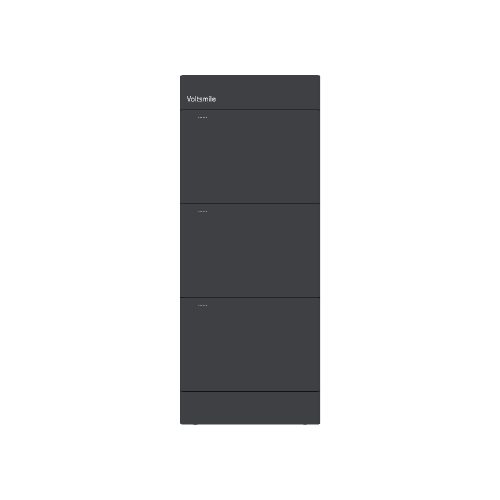
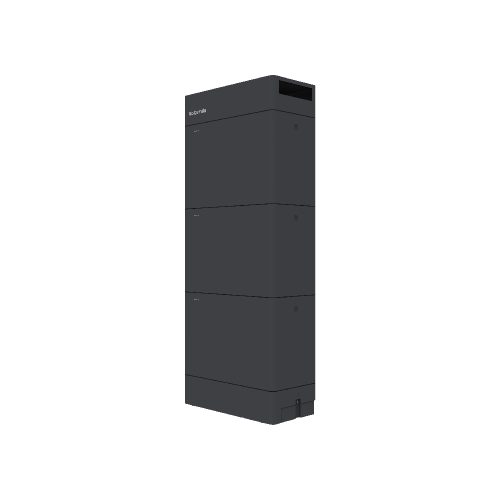
For an installer comparing rack-mounted home storage batteries, V10 provides a 51.2V, 100Ah module with 5.12kWh nominal energy. Start with V10 when a rack-based layout suits the project, then assess the required energy, load power and complete inverter configuration separately.
For a Victron project, V10 is named in Victron’s supported-battery guide for specified 48V systems. That gives a model-specific starting point for selection; the battery offered for the project must still be matched to the guide by its exact model, BMS platform and firmware.
Turn an energy target into a system specification
One V10 module is rated at 51.2V × 100Ah = 5,120Wh, or 5.12kWh nominal. For arithmetic comparison, two such module ratings add to 10.24kWh nominal. This sum does not approve a two-battery installation or establish usable AC energy; the permitted battery combination and system limits need their own review.
| Project requirement | Information to use for selection |
|---|---|
| Stored energy | Give the energy target in kWh and say whether it means nominal battery energy, usable battery energy or usable AC energy. Include the required backup loads and duration. |
| Load power | List continuous and peak loads in kW. Check both the inverter limits and the supplied battery’s approved charge/discharge limits; 100Ah is capacity, not output power. |
| Usable energy and runtime | Use the allowed state-of-charge range, reserve, temperature and system losses for the proposed configuration. Do not use 5.12kWh as a guaranteed usable-energy or backup-time figure. |
| Rack and future expansion | Provide rack/cabinet dimensions, installation conditions and the planned expansion. Confirm module count, mounting and mixed-version rules for the supplied V10 before committing to the layout. |
V10 selection conditions for a Victron 48V system
The following conditions summarise Victron’s Voltsmile guide for project selection. Here, 51.2V is the battery’s nominal rating and 48V is the Victron system class. The guide does not cover 12V or 24V Victron systems.
| Selection point | Official scope and project check |
|---|---|
| Battery identity | V10, V10 RPC and V10+ are listed separately. A V10 label or a Classic-named manual does not establish which supported version is being supplied. Match the order specification and nameplate to the applicable documents. |
| Inverter/charger | Use the specified 48V scope: the guide names VE.Bus MultiPlus, MultiPlus-II, Quattro, Quattro-II and the listed RS range. Check the full inverter/charger model rather than relying on the Victron brand name alone. |
| GX device and firmware | The guide names Cerbo GX, Cerbo-S GX and Ekrano GX; its firmware table specifies Venus OS v3.80 minimum for those devices. EasySolar-II GX and MultiPlus-II GX have integrated GX functionality, so assess that configuration before adding a separate GX device. |
| Battery BMS firmware | The stated minimum BMS firmware 31144-1.14-H applies to the P16S100A-MH31144-20A / MH31144 platform. Identify the supplied BMS first; do not apply this version number to a different or unidentified BMS. |
| Communication and cable | The guide specifies 500 kbit/s BMS-Can and a Type A cable. Its cable number is ASS030710018, while Victron’s general Type A manual lists ASS030710118. Obtain approval for the exact cable and battery revision; these numbers are not confirmed here as interchangeable or included with the battery. |
| Other CAN devices | BMS-Can at 500 kbit/s and VE.Can at 250 kbit/s are separate buses. A single-CAN Cerbo-S GX assigned to the battery at 500 kbit/s cannot also serve 250 kbit/s VE.Can equipment on that port. Include other CAN devices in the system brief. |
| Battery control | The guide requires DVCC on and specifies SVS off. The BMS supplies voltage and charge/discharge current limits for GX control. Use the approved battery limits and the model-specific guide for the commissioning plan. |
Technical references and a V10 project enquiry
Use the V10 datasheet for an initial specification comparison. The linked installation manual carries a Classic filename; establish that it applies to the supplied V10 and its revision before using it for installation. RPC-named conformity files also need an exact model and document-scope match.
For a project quotation, send the destination country, installation or distribution role, project quantity and required delivery date, together with the inverter/GX full models and known firmware, energy target, continuous/peak loads, rack conditions and expansion plan. Ask for the offered SKU and BMS version, applicable datasheet/manual revisions, market-specific conformity records and written warranty terms in the quotation. State whether the requirement is a one-off installation or a recurring supply programme.
Additional V10 selection questions
Why is a 51.2V V10 described in a Victron 48V system guide?
51.2V is the V10 battery’s nominal voltage. Victron’s guide uses 48V for the compatible inverter/charger system class and lists V10 at 51.2V, 100Ah and 5.12kWh. Those descriptions refer to different ratings; they do not make the V10 suitable for 12V or 24V Victron systems.
Which Type A cable should be included in a V10 project specification?
Specify the cable approved for the exact battery and GX combination. The Voltsmile guide names Type A ASS030710018, while the general Victron Type A cable reference lists ASS030710118. This page does not establish that one replaces the other or that either is supplied as standard. Resolve the part number with the battery and system technical contacts before ordering the cable.