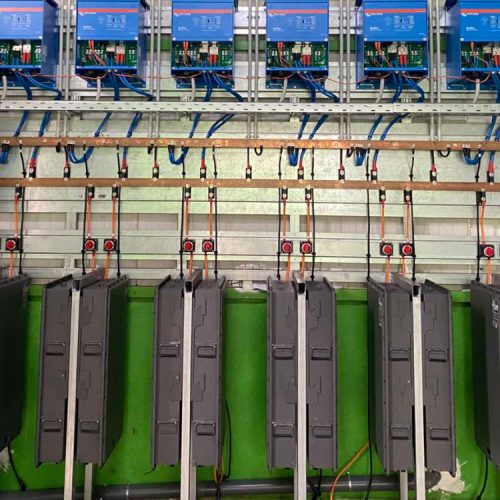


Low-voltage batteries for Victron home energy projects
For installers, system integrators and distributors comparing home energy storage batteries, the V10 rack-mounted battery and W1 wall-mounted battery provide two different starting points. Compare the mounting format and nominal stored energy first, then match the battery version to the inverter, control equipment and project requirements.
Victron’s published Voltsmile guidance lists V10 and W1 for supported 48 V inverter/charger systems, subject to the specified communication and firmware conditions. Their 51.2 V battery rating is a nominal voltage; it does not describe a 51.2 V AC output or approval for a 12 V or 24 V system.
Compare a rack-mounted V10 and a wall-mounted W1
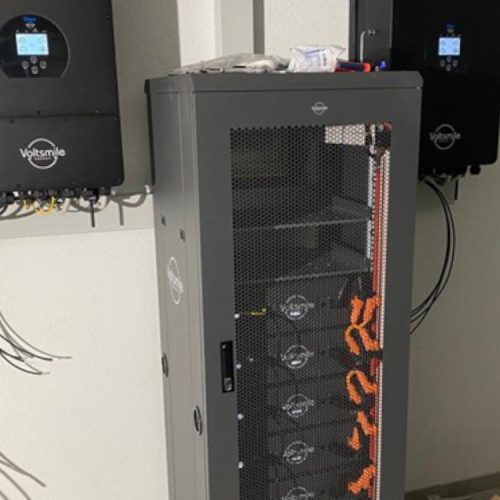
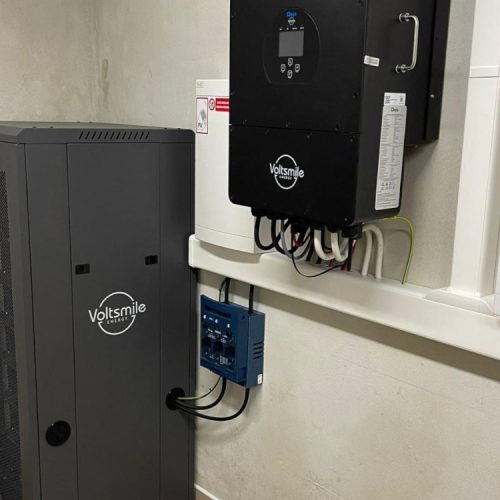
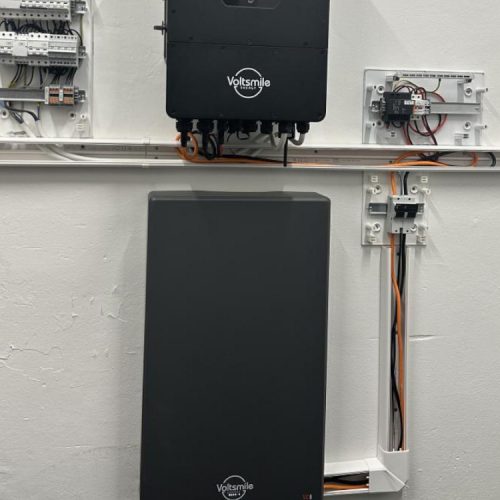
Start with the physical layout: compare the V10 when the project calls for a rack-mounted format, or the W1 when a wall-mounted format fits the design. The installation design still needs the correct model dimensions, weight, clearances, mounting requirements and environment.
The nominal energy of one W1 is twice that of one V10. This comparison describes stored energy, not usable AC energy, maximum output power or an approved parallel configuration. Check whether the quotation covers the battery alone or also includes the inverter, solar charger and installation.
On mobile, swipe horizontally to see all columns.
| Model and format | Nominal voltage | Nominal capacity | Nominal energy |
|---|---|---|---|
| V10 — rack-mounted | 51.2 V | 100 Ah | 5.12 kWh |
| W1 — wall-mounted | 51.2 V | 200 Ah | 10.24 kWh |
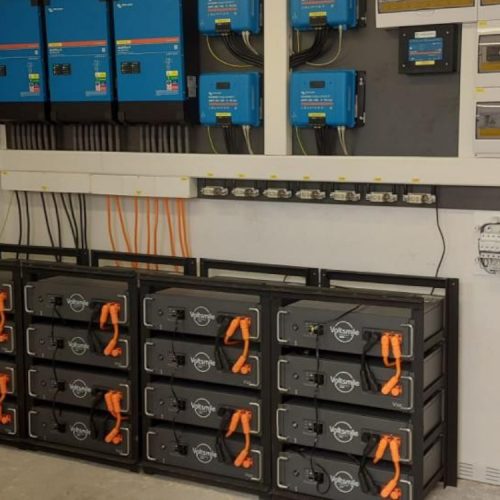
V10 Rack Mounted LI-ION BATTERY 51.2V 100AH Home Energy Solution
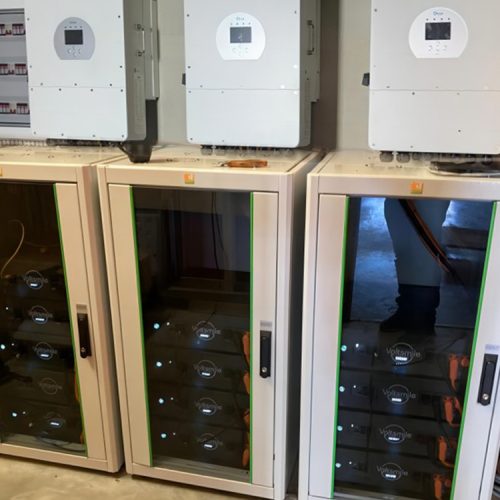
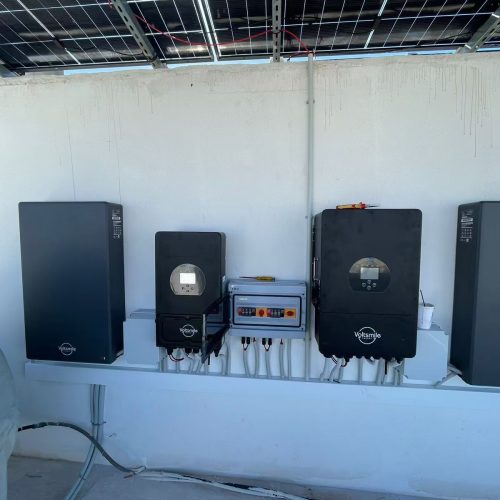
W1 Wall-Mounted LI-ION BATTERY 51.2V 200AH
Size stored energy and power separately
Use the household’s energy demand and required backup hours to estimate storage needs. Assess continuous loads and starting peaks separately when choosing the inverter and checking battery current limits. Nominal energy is voltage multiplied by amp-hours: 51.2 V × 100 Ah ÷ 1,000 = 5.12 kWh; 51.2 V × 200 Ah ÷ 1,000 = 10.24 kWh.
Usable energy and backup duration depend on the approved operating window, reserve settings, conversion losses, temperature and loads. Doubling nominal energy does not establish a doubling of output power. Obtain model-specific current and expansion limits for the supplied version before finalising the design.
Match the battery to the complete Victron system
Compatibility depends on the complete configuration. The published requirements cover a supported 48 V inverter/charger, an appropriate GX device, BMS-Can communication at 500 kbit/s, the specified firmware and DVCC control. Match these conditions to the exact battery and BMS version in the order.
Use the current Victron guidance alongside the model-specific documents. An equal capacity, a similar product name or a Classic or RPC document is not evidence that two versions are interchangeable. Cable selection must also match the supplied BMS and the approved project design.
Victron’s Voltsmile model and system guidance
Battery selection questions for Victron projects
Prepare a clear battery procurement enquiry
For an installer, integration project or distribution enquiry, provide the project country, installation format, target nominal storage, continuous and peak loads, existing or planned Victron inverter/charger and GX models, and the required quantity. Include the intended installation environment and the documents needed for technical review.
Request the exact battery SKU, BMS and firmware identification, applicable datasheet and installation manual, cable and accessory scope, and the commercial terms for the order. Supply availability, delivery dates, warranty and channel arrangements should be stated in the quotation for that project.