

The Technical Architecture of Modern Home Energy Storage Systems: A Deep Look at Voltsmile
Voltsmile positions itself at the forefront of residential energy storage. The company combines electrochemical innovation, thermal engineering, and intelligent software control. This article examines the core technical specifications, safety architectures, and manufacturing precision behind Voltsmile’s products.

LiFePO₄ Chemistry: The Safe Foundation
Voltsmile commits to Lithium Iron Phosphate (LiFePO₄) chemistry across its entire product portfolio. Unlike Nickel Manganese Cobalt (NMC) batteries, LiFePO₄ offers superior thermal stability. The phosphate-based cathode structure resists thermal runaway effectively. This safety characteristic proves critical for indoor and garage-mounted installations.
Voltsmile engineers its prismatic LiFePO₄ cells to deliver 6,000–8,000 cycles at 80% Depth of Discharge. This performance translates to an operational lifespan exceeding 15 years under daily cycling. Consequently, the Levelized Cost of Storage (LCOS) becomes competitive with traditional grid electricity. The nominal voltage of 51.2V ensures compatibility with standard hybrid inverters.
Thermal Management: Maintaining Optimal Performance
Temperature regulation presents one of the most challenging aspects of residential battery design. Voltsmile integrates advanced thermal management strategies to maintain cell temperature variance within ±1°C. The company achieves this precision through liquid cooling systems in high-capacity units. Smaller configurations rely on passive thermal dissipation instead.
These systems operate across an ambient temperature range of -20°C to 55°C. Self-heating options address extreme cold climates effectively. Natural cooling architectures further reduce parasitic energy consumption. Ultimately, this approach contributes to the overall round-trip efficiency of 95–98%.
Modular Design: Scaling with Household Needs
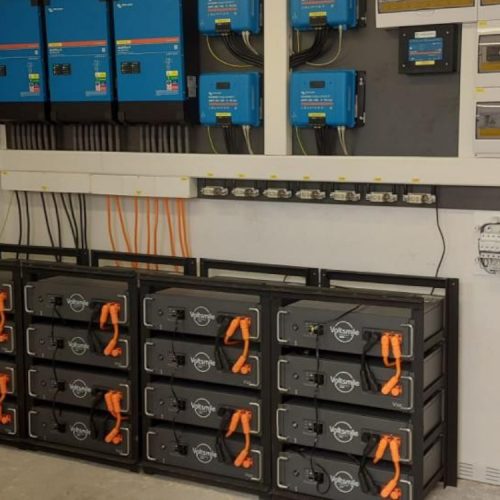
Residential energy demands rarely remain static over time. Households may start with a modest 5 kWh or 10 kWh system. Eventually, they expand as EV adoption or heat pump installations increase consumption. Voltsmile addresses this need through parallel connectivity.
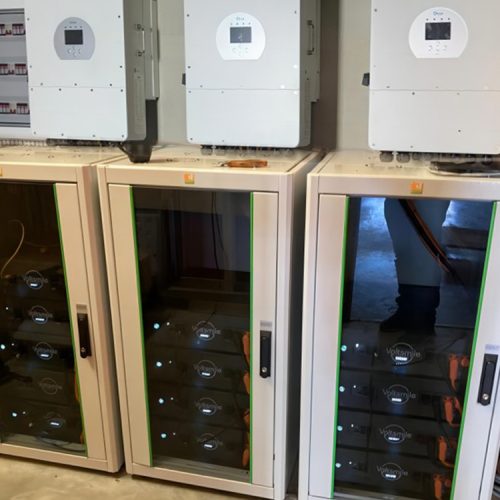
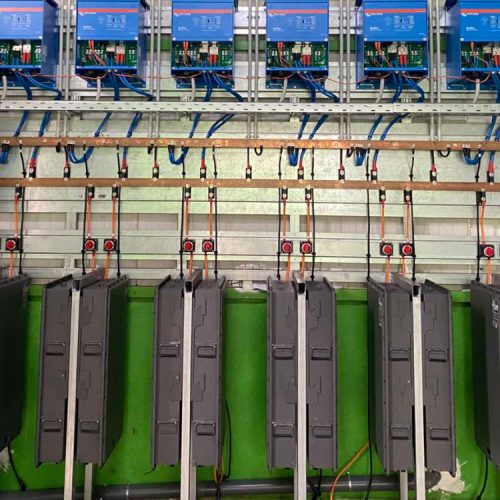
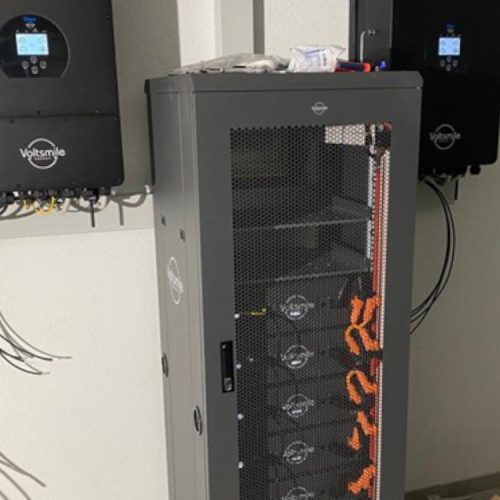
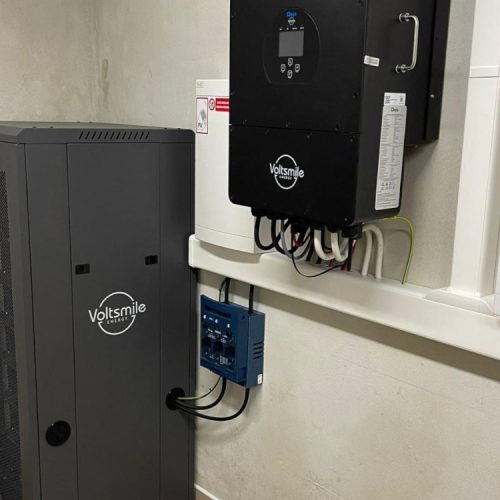
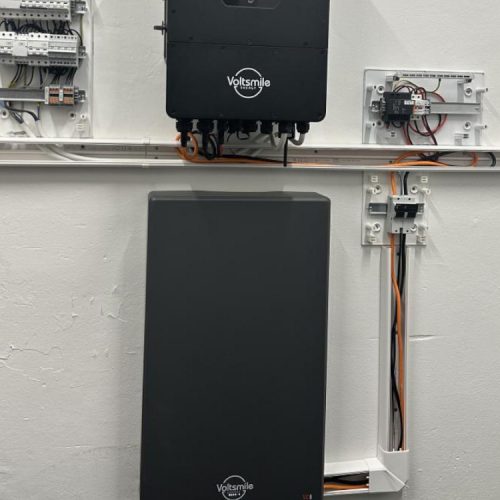
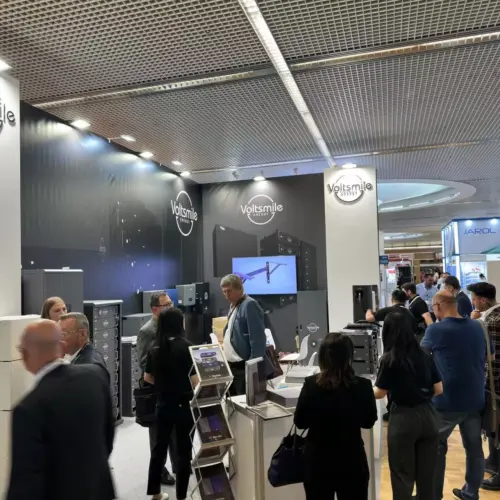
The architecture allows up to 16 battery units to operate in tandem. Homeowners can incrementally increase storage capacity without replacing the entire system. This modularity preserves the initial capital investment effectively. For whole-home backup, Voltsmile offers configurations scaling to 40 kWh or more. The stackable Monolith series exemplifies this approach with aesthetic design and functional expandability.
Intelligent Software: Optimizing Energy Flows
Modern energy storage extends well beyond hardware components. Voltsmile’s proprietary V-OS platform leverages artificial intelligence for optimization. The system learns user behavior, weather forecasts, and time-of-use utility tariffs. Consequently, it determines optimal charge and discharge schedules automatically.
This AI-driven load forecasting maximizes self-consumption of solar generation. At the same time, it minimizes grid import costs significantly. Real-time monitoring delivers data through cloud-based platforms. Users can access information via iOS and Android applications. The system supports both CAN and RS485 communication protocols. Therefore, installers gain flexibility in designing hybrid PV-battery systems.
Safety Architecture: Protecting Homes and Families
Safety validation remains non-negotiable in residential applications. Voltsmile subjects its systems to rigorous testing against international standards. These include UL 1973 for battery safety and UL 9540 for energy storage systems. Additionally, IEC 62619 for industrial batteries applies as well.
The UL9540A thermal runaway propagation test evaluates fire risk in worst-case scenarios. This test forms a cornerstone of the company’s safety validation process. Beyond passive safety, the Battery Management System (BMS) provides active protection. The BMS includes overvoltage cutoffs and undervoltage cutoffs. It also features overcurrent protection and short-circuit protection. Temperature monitoring occurs at the individual cell level. Isolation monitoring detects ground faults continuously.
Furthermore, cybersecurity measures comply with IEC 62443-3-3. This protects against remote exploitation of internet-connected energy infrastructure.
Manufacturing Precision: Consistency Through Vertical Integration
Voltsmile gains a manufacturing advantage through vertical integration. The company controls production from cell assembly to final system integration. Consequently, it ensures consistent quality across its global supply chain. Automated production lines achieve millimeter-level precision in module placement. Machine vision systems perform real-time quality inspections at every stage.
Every system undergoes a 72-point verification process. This includes 500+ charge-discharge cycles in environmental chambers. These chambers simulate extreme operating conditions effectively. As a result, the defect rate reaches just 0.02%. This figure significantly outperforms the industry average of 1%.
Conclusion: A Technically Robust Path Forward
Voltsmile’s residential energy storage systems converge safety, longevity, and intelligence. The company strategically deploys LiFePO₄ chemistry for inherent stability. Advanced thermal management ensures reliable operation across climates. Modular scalability accommodates growing household energy demands. AI-driven software optimizes consumption patterns intelligently. Rigorous safety certifications protect both property and occupants.
As grid instability and renewable adoption continue to rise, Voltsmile offers a technically robust pathway. Homeowners gain energy independence through engineering excellence and manufacturing precision.