

Energy Storage Battery Manufacturing: Innovations and Best Practices by Voltsmile
Introduction
Energy storage batteries are revolutionizing the renewable energy sector, enabling efficient power management, grid stability, and sustainable energy solutions. As a leading innovator in energy storage batteries manufacturing, Voltsmile specializes in high-performance energy storage battery manufacturing, catering to residential, commercial, and industrial applications. This article explores the latest advancements, manufacturing processes, and industry trends shaping the future of energy storage batteries.
1. The Growing Importance of Energy Storage Batteries
The global shift toward renewable energy sources like solar and wind has increased the demand for reliable energy storage solutions. Key drivers include:
- Grid Stabilization: Batteries help balance supply and demand, reducing reliance on fossil-fuel peaker plants.
- Renewable Integration: They store excess solar/wind energy for use during low-generation periods.
- Energy Independence: Businesses and homeowners reduce electricity costs by storing energy for peak usage.
- Electric Vehicle (EV) Expansion: The rise of EVs accelerates demand for high-capacity, long-lasting batteries.
Voltsmile’s cutting-edge battery systems are designed to meet these challenges with superior efficiency and durability.
2. Key Technologies in Energy Storage Battery Manufacturing
2.1 Lithium-Ion Batteries (Li-ion)
Li-ion batteries dominate the market due to their high energy density, long cycle life, and fast charging capabilities. Voltsmile employs advanced Li-ion chemistries, including:
- NMC (Nickel Manganese Cobalt): Ideal for high-energy applications like EVs and grid storage.
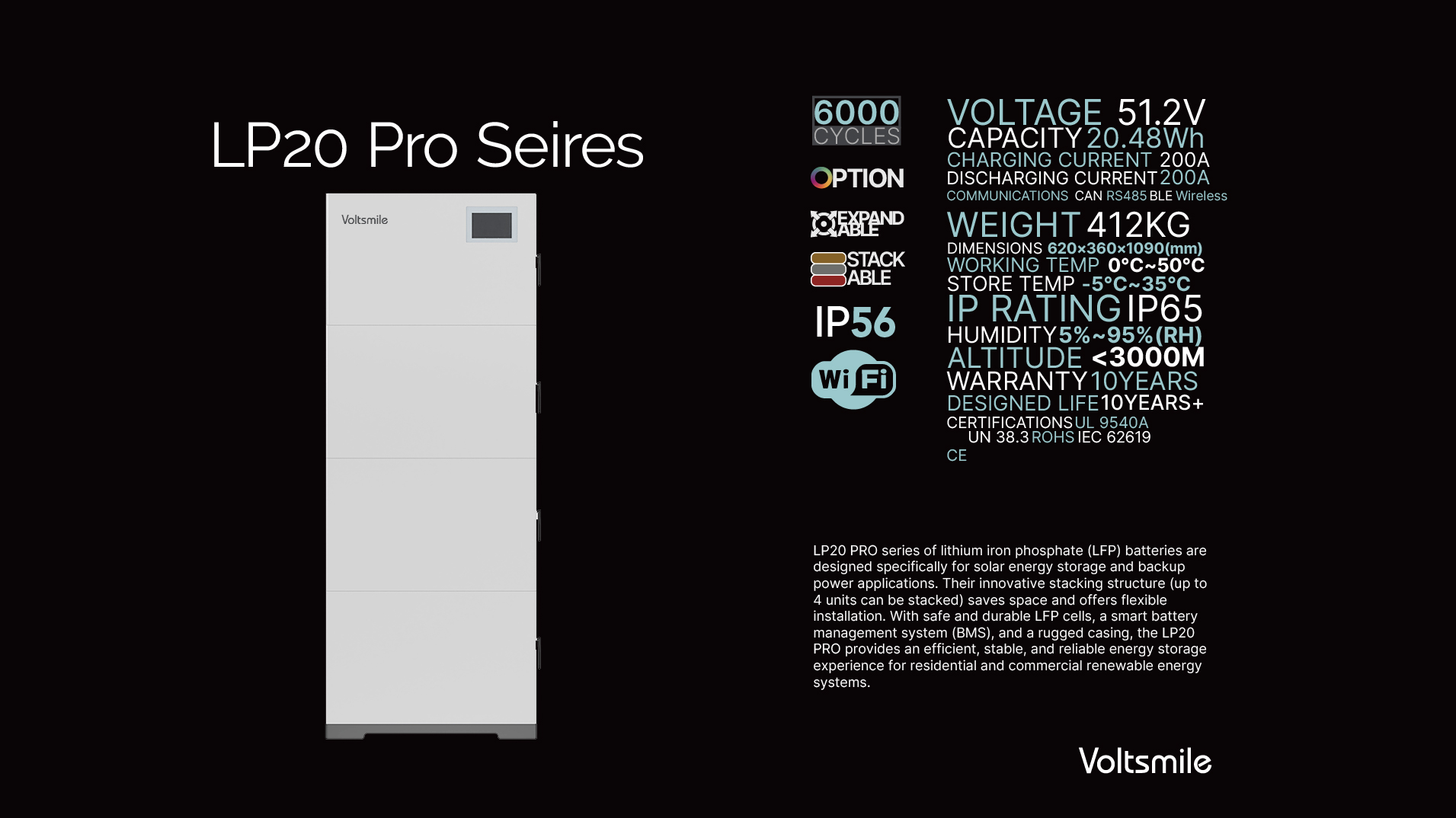
- LFP (Lithium Iron Phosphate): Offers enhanced safety and longevity, perfect for residential and commercial storage.
2.2 Solid-State Batteries (Future Innovation)
Solid-state batteries promise higher energy density and improved safety by replacing liquid electrolytes with solid materials. Voltsmile is investing in R&D to bring this technology to market.
2.3 Flow Batteries
For large-scale energy storage, flow batteries (e.g., vanadium redox) provide scalability and long-duration storage, making them ideal for utility-scale projects.
3. The Manufacturing Process at Voltsmile
Voltsmile follows a rigorous, quality-driven manufacturing process to ensure reliability and performance:
3.1 Material Selection & Cell Production
- High-Purity Raw Materials: Only premium-grade lithium, cobalt, nickel, and graphite are used.
- Electrode Coating: Precision coating ensures uniform energy distribution and minimizes degradation.
3.2 Battery Assembly & Testing
- Automated Production Lines: Robotic assembly enhances consistency and reduces defects.
- Quality Control: Each battery undergoes stress tests (thermal, electrical, and mechanical) to guarantee safety.
3.3 Smart Battery Management Systems (BMS)
Voltsmile integrates AI-powered BMS to optimize charging, prevent overheating, and extend battery lifespan.
4. Sustainability & Environmental Responsibility
Voltsmile is committed to eco-friendly manufacturing:
- Recycling Programs: Old batteries are repurposed or recycled to recover valuable materials.
- Low-Carbon Production: Renewable energy powers manufacturing facilities to reduce carbon footprint.
- Non-Toxic Materials: Phasing out hazardous substances in favor of safer alternatives.
5. Future Trends in Energy Storage Battery Manufacturing
- AI & Machine Learning: Predictive analytics will optimize battery performance and maintenance.
- Second-Life Batteries: Used EV batteries will be repurposed for stationary storage.
- Gigafactories Expansion: Increased production capacity will lower costs and improve accessibility.
Conclusion
As the demand for energy storage grows, Voltsmile remains at the forefront of innovation, delivering high-efficiency, sustainable battery solutions. By leveraging advanced manufacturing techniques and sustainable practices, we empower a cleaner, more resilient energy future.