

Outdoor Energy Storage Technical: Core Technologies and Engineering Considerations
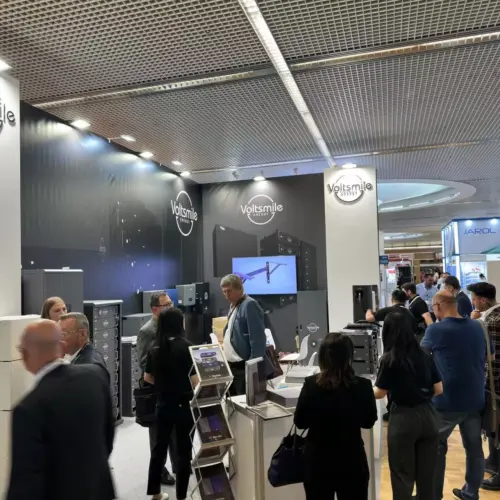
Global energy systems are shifting toward decentralization and renewable integration. Consequently, outdoor energy storage has evolved from a niche application into critical infrastructure. Unlike indoor battery systems, outdoor cabinets must maintain peak performance while facing temperature extremes, moisture, dust, and corrosive atmospheres. This article examines the technical foundations defining modern outdoor energy storage, with reference to engineering approaches from manufacturers like Voltsmile.

The Case for Purpose-Built Outdoor Systems
Outdoor energy storage faces environmental stressors that indoor installations never encounter. A battery cabinet at a remote telecom tower in the Middle East operates under conditions far different from one at a coastal microgrid. Therefore, the technical response must address thermal management, ingress protection, structural durability, and electrochemical stability together.
Industry standards now codify these requirements. For example, IEC 62933-4-3:2025 addresses environmental effects on battery energy storage systems. Specifically, it identifies causes and preventative measures related to lightning, seismic activity, water, air, flora, fauna, and human interference. This standard reflects growing recognition that outdoor BESS deployment demands dedicated engineering discipline.
Core Technical Pillars of Outdoor Energy Storage
LiFePO4 Chemistry and Cycle Life Economics
Lithium Iron Phosphate (LiFePO4) now dominates outdoor stationary storage for sound technical reasons. The cathode material exhibits inherently lower thermal runaway risk than nickel-rich chemistries. Consequently, this chemistry provides a critical safety margin for remote or unattended installations.
From a lifecycle perspective, premium outdoor systems achieve over 6,000 deep cycles at 80% depth of discharge. This translates to more than a decade of daily service. Moreover, some specialized lines, such as Voltsmile’s S16 Series, claim cycle life exceeding 8,000 cycles. These figures directly influence the Levelized Cost of Storage (LCOS), a key financial metric for developers. Ultimately, extended service life reduces battery replacement frequency and total cost of ownership.
Ingress Protection and Environmental Sealing
The IP rating system provides a standardized framework for evaluating enclosure protection. For outdoor energy storage, IP65 represents a practical baseline. Specifically, this rating means complete protection against dust ingress and resistance to low-pressure water jets.
However, IP rating alone tells an incomplete story. Real-world outdoor deployment also requires consideration of several factors. First, temperature operating range matters greatly. Voltsmile systems specify operation from -30°C to 60°C, with optional self-heating modules for cold climates. Second, corrosion resistance proves essential for coastal installations. Saline atmospheres accelerate metal degradation, so corrosion-resistant materials and surface treatments extend operational life. Third, condensation management demands attention. Temperature cycling between day and night can cause internal condensation, threatening electronics and battery terminals. Therefore, proper ventilation design and desiccant systems mitigate this risk.
Thermal Management Strategies
Thermal management represents one of the most significant engineering challenges in outdoor storage design. Battery cells perform optimally within a narrow temperature band, typically 15°C to 35°C. Outside this range, capacity fades faster, and internal resistance increases.
Two primary approaches dominate the market. First, air cooling with HVAC systems maintains internal temperatures within specification. This approach is common in cabinet-style systems where precise temperature control is prioritized. Second, more advanced systems employ liquid cooling loops with coolant designed for extended service life. For instance, Dunext’s Powerhill cabinet uses liquid cooling with a 10-year coolant replacement interval.
The choice between air and liquid cooling involves trade-offs in energy consumption, maintenance complexity, and thermal uniformity. Generally, liquid cooling provides superior cell-to-cell temperature consistency, which extends pack life in demanding duty cycles.
Intelligent Battery and Energy Management
Modern outdoor storage systems integrate sophisticated electronics that go far beyond simple voltage monitoring. The Battery Management System (BMS) performs real-time cell balancing, over-voltage protection, short-circuit prevention, and temperature monitoring.
Above the BMS level, the Energy Management System (EMS) optimizes system operation. AI-driven EMS platforms enable remote diagnostics, over-the-air firmware updates, and automated load balancing for energy arbitrage. As a result, these capabilities reduce truck rolls for maintenance and allow operators to respond to grid conditions dynamically.
Fire Safety Engineering
Safety systems in outdoor storage have evolved significantly in response to industry incidents and tightening standards. Contemporary designs incorporate multiple protection layers. At the cell level, LiFePO4 chemistry provides inherent thermal stability. Additionally, Grade A automotive-certified cells undergo rigorous quality screening before assembly. At the pack level, aerosol fire suppression systems and multi-level insulation contain thermal propagation in the rare event of cell failure. At the system level, heat and smoke detection combine with alarm and emergency shutdown protocols. Consequently, these layers provide early warning and automated response.
Modular Architecture and Scalability
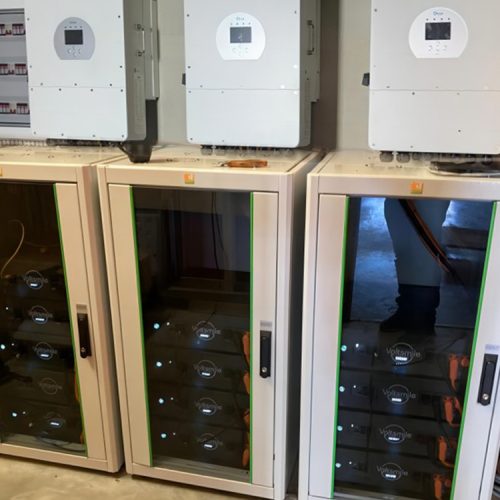
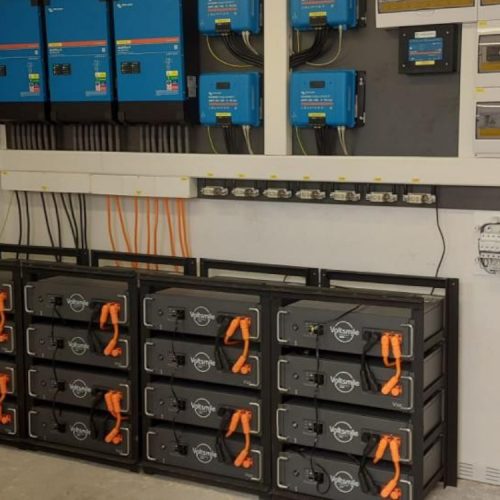
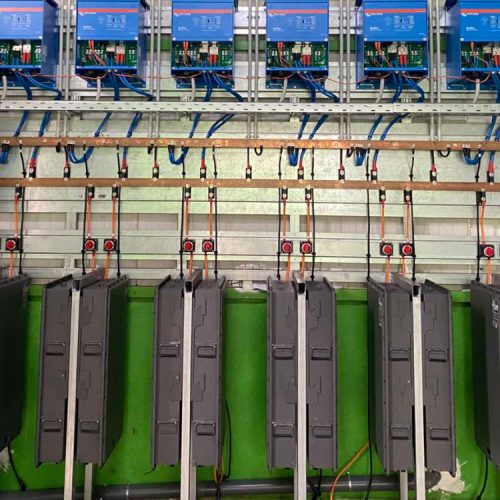
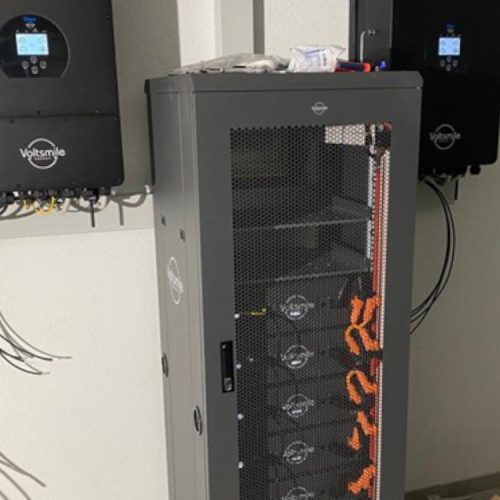
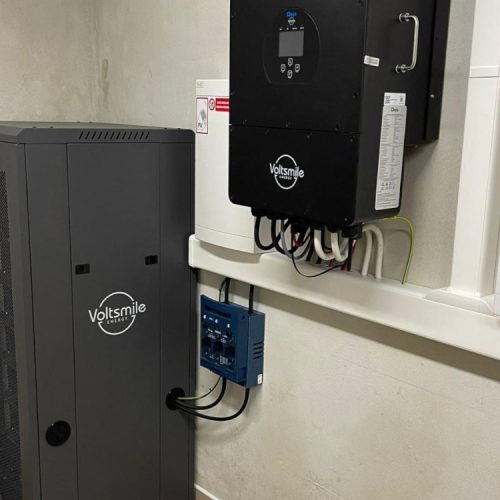
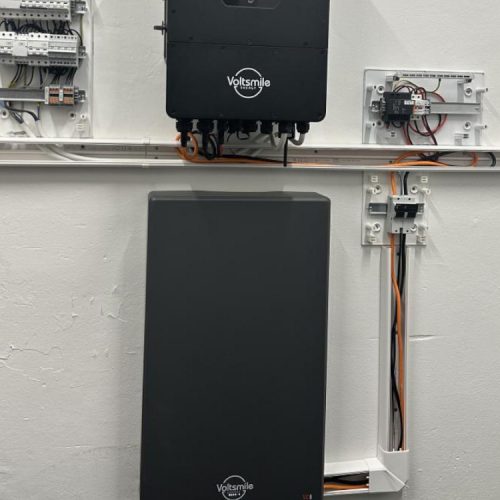
The shift toward modular, all-in-one cabinet designs has simplified deployment and expanded application flexibility. Pre-assembled systems arrive with battery racks, BMS, thermal management, and often hybrid inverter compatibility integrated within a single enclosure.
This architecture enables capacity scaling from 5kWh for small commercial applications to over 500kWh for industrial microgrids. Voltage flexibility, supporting 48V, 96V, 120V, and high-voltage DC bus configurations, allows integration with diverse power conversion equipment.
Practical Applications and Deployment Considerations
Outdoor energy storage systems now serve applications across multiple sectors. Telecommunications operators deploy cabinets at remote cell towers to replace diesel generators, reducing fuel logistics costs and emissions. Commercial and industrial facilities use outdoor storage for peak shaving, reducing demand charges and providing backup power during grid outages. Renewable energy projects integrate storage to capture excess solar or wind generation for dispatch during high-value periods.
Installation best practices emphasize site preparation and environmental awareness. Foundations must support the full weight of the cabinet and batteries, which can reach 1,100 to 1,250 kg for larger configurations. Proper drainage prevents water accumulation around the enclosure. Shading or reflective coatings reduce solar heat gain. Finally, accessibility for maintenance must be preserved while maintaining security.
Conclusion
Outdoor energy storage technical requirements demand integrated engineering across electrochemistry, thermal science, materials, and power electronics. The systems that succeed in this space combine robust LiFePO4 cells, effective ingress protection, intelligent management systems, and rigorous safety engineering. As grid decentralization accelerates and renewable penetration increases, the technical sophistication of outdoor storage will continue to advance. Ultimately, this progress enables reliable power in the most demanding environments on Earth.