

Outdoor Energy Storage Supply: Voltsmile’s Role in Powering Resilient Infrastructure
The global energy landscape shifts toward decentralization and renewable integration. As a result, demand for reliable outdoor energy storage has never been more urgent. Utilities, telecom operators, and off-grid communities need battery systems that withstand harsh environments. These systems must also deliver consistent, safe power. Outdoor energy storage supply involves ruggedized enclosures, intelligent thermal management, and grid integration. This article explores the technical requirements, market drivers, and manufacturing capabilities defining this segment.

The Growing Need for Outdoor Energy Storage Systems
Outdoor energy storage systems serve applications with unreliable or nonexistent grid connections. These include remote telecom towers, solar farms, industrial microgrids, and EV charging stations. Unlike indoor systems, outdoor units must endure temperature extremes, humidity, dust, and corrosion. As a result, the global outdoor ESS market is growing substantially. Renewable adoption and aging grid infrastructure primarily drive this expansion.
Several factors accelerate this trend. First, 5G network expansion requires backup power at thousands of remote cell sites. Second, commercial facilities seek to reduce peak demand charges through on-site storage. Third, solar and wind installations need buffer capacity to smooth intermittent generation. Each application imposes distinct requirements on system design, capacity, and protection.
Critical Design Requirements for Outdoor ESS
Weatherproofing and Environmental Durability
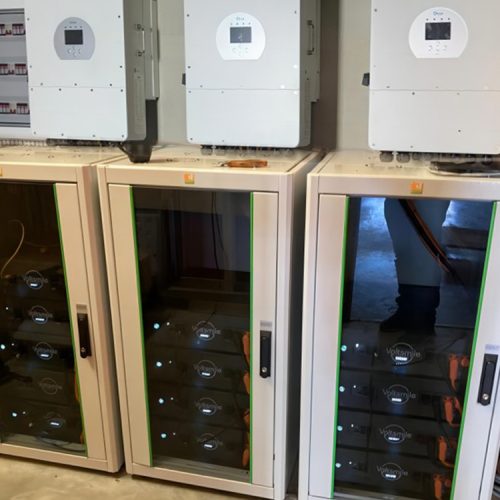
The enclosure most clearly differentiates indoor and outdoor energy storage. Outdoor systems typically require IP65 or higher ratings. This means they resist dust and low-pressure water jets from any direction. Voltsmile’s outdoor battery storage systems meet this standard consistently. Moreover, they incorporate corrosion-resistant materials for coastal, desert, and Arctic conditions. Temperature tolerance is equally demanding, with ranges spanning -30°C to 60°C.
Battery Chemistry: The Case for LiFePO4
Lithium iron phosphate (LiFePO4) chemistry has become the preferred choice for outdoor stationary storage. This reflects fundamental safety and longevity advantages. LiFePO4 cells offer greater thermal stability than NMC alternatives. Therefore, they resist thermal runaway even under abuse conditions. They also deliver over 6,000 deep cycles, exceeding ten years of service life.
Voltsmile’s outdoor systems leverage this chemistry for safety and extended operational life. The non-toxic nature of LiFePO4 also simplifies recycling and disposal. Consequently, project permitting and environmental compliance become easier.
Intelligent Battery Management and Energy Management
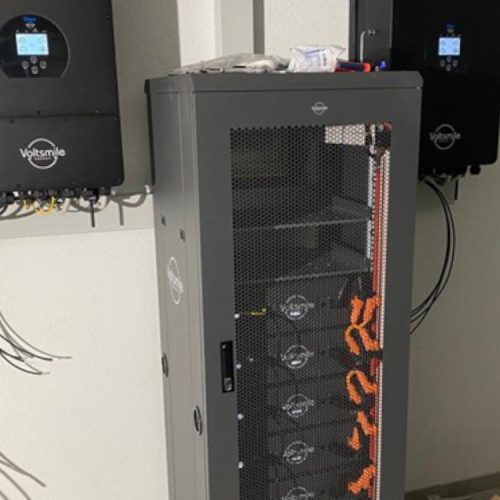
A robust Battery Management System (BMS) is essential for outdoor deployments. Physical inspection is infrequent in such installations. Modern BMS platforms monitor cell voltage, current, and temperature in real time. They also perform active cell balancing and isolate faults before escalation. Voltsmile’s proprietary BMS provides 24/7 monitoring with remote diagnostics capabilities.
Beyond the BMS, an Energy Management System (EMS) optimizes stored energy dispatch. For commercial applications, AI-driven EMS platforms perform load forecasting and time-of-use arbitrage. They also reduce demand charges effectively. Remote firmware updates ensure systems improve over time without physical intervention.
Key Applications Driving Outdoor ESS Demand
Telecommunications and 5G Infrastructure
Telecom operators rank among the largest adopters of outdoor energy storage. Remote cell towers traditionally relied on diesel generators for backup power. However, diesel is expensive, polluting, and logistically challenging. Outdoor battery cabinets now replace or supplement generators. They provide silent, emissions-free backup with remote monitoring capabilities.
Renewable Energy Integration
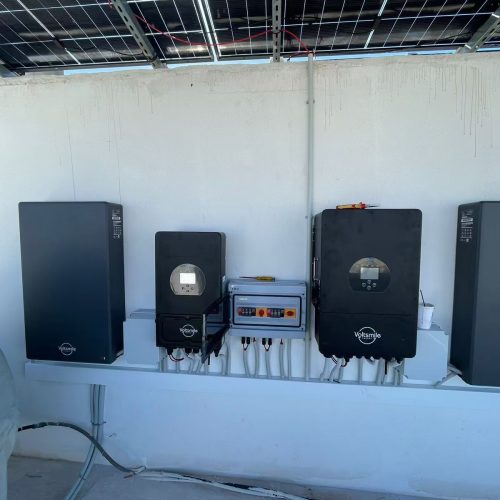
Solar farms generate excess power during peak sunlight hours. Without storage, that energy is curtailed or exported at low value. Outdoor battery systems capture surplus generation for evening peak discharge. This improves project economics and grid stability. Voltsmile’s systems support solar self-consumption optimization for various applications.
EV Charging Infrastructure
Ultra-fast DC charging stations impose significant demand charges on host facilities. Outdoor battery buffers can absorb peak charging loads. Consequently, they reduce grid strain and electricity costs. This application is particularly relevant for highway corridor charging. Grid capacity may be limited in such locations.
Industrial Microgrids and Off-Grid Power
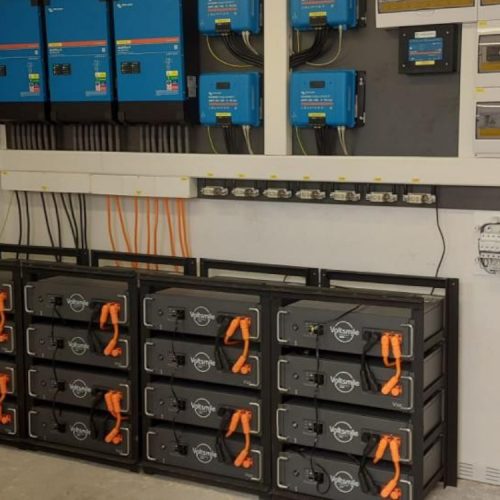
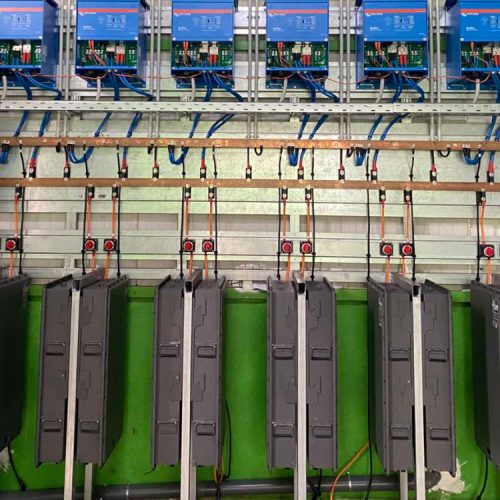
Factories, data centers, and remote mining operations require continuous power. Outdoor ESS provides island-mode capability during grid failures. Therefore, critical operations continue during outages. The modular architecture of modern systems allows capacity expansion from 5kWh to over 500kWh. This scalability supports evolving energy needs.
Voltsmile’s Manufacturing Approach
Vertically Integrated Production
Voltsmile operates as a vertically integrated manufacturer. The company controls production from cell sourcing through final system assembly. Manufacturing facilities span over 50,000 square meters across Shenzhen, Huizhou, Jiangxi, and Dongguan. Additionally, market centers operate in Amsterdam and Düsseldorf. This integration reduces supply chain risk and ensures consistent quality.
Safety and Compliance
Every outdoor system undergoes rigorous testing to meet international standards. Voltsmile products hold certifications including UL1973, IEC62619, CE, and UN38.3. These cover safety, transportation, and electromagnetic compatibility requirements. Integrated fire suppression systems and multi-level thermal insulation further enhance field safety.
Customization and Scalability
No two outdoor energy storage projects are identical. Therefore, Voltsmile offers extensive customization. Options include voltage configurations (48V, 96V, 120V, and high-voltage DC bus). Communication protocols include RS485, CAN bus, Wi-Fi, and 4G/5G. Modular designs allow capacity expansion without replacing existing equipment. This protects initial investments as energy needs grow.
Conclusion
Outdoor energy storage supply sits at the intersection of renewable energy, grid resilience, and industrial reliability. Grids face mounting pressure from electrification and extreme weather. Therefore, battery systems capable of operating reliably in harsh environments will become essential infrastructure. Voltsmile combines LiFePO4 chemistry, weatherproof engineering, and intelligent management. Consequently, it stands as a capable partner for telecom operators, renewable developers, and industrial facilities. These organizations seek dependable outdoor power solutions.