

Outdoor Battery Storage System Customized: The Complete Guide for Modern Energy Resilience
The global energy landscape now shifts toward decentralization and renewable integration. Consequently, outdoor battery storage systems have become critical infrastructure for businesses, utilities, and remote operations. Traditional indoor installations require climate-controlled rooms. In contrast, modern customized outdoor battery storage solutions withstand harsh environmental conditions. Moreover, they deliver reliable, scalable power. Organizations seeking energy independence need these systems. Operational continuity depends on them too. Understanding outdoor battery storage customization is therefore essential.
The market reflects this momentum. Specifically, the global outdoor energy storage power market reached approximately USD 1.23 billion in 2024. Furthermore, analysts project a robust 22.00% CAGR through 2035. Increasing demand for energy reliability drives this growth. Rising natural disasters and power outages also fuel it. This trajectory reveals a fundamental truth. Businesses can no longer treat energy storage as an afterthought. Confining it to climate-controlled rooms no longer works.

Why Customization Matters for Outdoor Battery Storage
A one-size-fits-all approach fails outdoor energy storage. Environmental conditions vary dramatically across deployments. Power requirements differ too. Operational constraints change by scenario as well. A telecommunications tower in the Middle East faces 50°C heat and blowing sand. Conversely, a microgrid in Northern Europe contends with sub-zero temperatures and heavy snow. A factory in Southeast Asia needs peak shaving capabilities. Meanwhile, a remote mining operation requires complete off-grid autonomy.
Customized outdoor battery storage systems address these variables through modular architecture. Configurable components enhance this flexibility further. Industry leaders like Voltsmile offer fully customizable solutions. Battery capacity ranges from 5kWh to 100kWh. Voltage options include 48V, 96V, and 120V. Communication protocols cover RS485, CAN, Wi-Fi, and 4G remote monitoring. This flexibility aligns the storage system with the application. It avoids forcing the application to adapt to a predetermined product.
Key Customization Dimensions for Outdoor Deployments
Environmental Hardening
Environmental protection is the most fundamental customization consideration. Outdoor battery cabinets must achieve appropriate Ingress Protection (IP) ratings. These ratings resist dust, water, and corrosion. IP55 offers basic protection for many commercial environments. However, more demanding installations benefit from IP65 or higher ratings. Coastal regions with salt-laden air need superior sealing. Dusty industrial zones require protection against fine particles and water jets.
Temperature management is equally critical. Lithium-ion batteries perform optimally within specific thermal windows. This is particularly true for Lithium Iron Phosphate (LFP) chemistries. Customized outdoor systems incorporate air conditioning units or liquid cooling systems. These maintain battery temperatures within safe operating limits. Ambient temperatures can swing from -30°C to 60°C. Some advanced systems include heating pads and insulated enclosures. These support cold-climate operations and ensure consistent year-round performance.
Capacity and Power Scalability
Customization extends to the electrical architecture. A small telecom backup application might require only a compact 10kWh cabinet. In contrast, commercial peak-shaving installations could demand 200kWh or more. Modular designs allow capacity scaling through additional battery modules. Paralleling multiple cabinets supports even larger installations.
Power conversion capabilities must also match the application. Some projects require integrated inverters for grid-tied operation. Off-grid deployments need robust inverter/charger combinations instead. These manage solar inputs, generator backup, and load demands simultaneously. Customized solutions can incorporate pre-configured power conversion systems (PCS). These range from 30kW to 125kW. Static transfer switches enable seamless source transitions.
Safety and Fire Protection
Safety customization is non-negotiable for outdoor battery storage. Indoor installations benefit from building fire suppression systems. Outdoor cabinets must be self-contained instead. Leading customized solutions incorporate aerosol-based fire suppression systems. These operate at both module and cabinet levels. Multi-level gas detection and thermal runaway prevention mechanisms add further protection. The 233kWh Powerhill cabinet from Dunext exemplifies this approach. It features a “six-level ultra safety design” with cell-level thermal insulation. IP67-rated packs and AI-driven risk warning complete the package.
Applications Driving Outdoor Storage Customization
Telecommunications Infrastructure
Telecom towers represent one of the fastest-growing segments for outdoor battery storage. Remote cell sites often lack reliable grid connections. Historically, they depended on diesel generators. This solution proved expensive, noisy, and high-maintenance. Customized outdoor cabinets now provide silent, emissions-free backup power. These integrate with solar arrays to reduce operational costs. They also shrink carbon footprints significantly.
Commercial and Industrial Peak Shaving
Factories, data centers, and large commercial facilities face significant demand charges. These charges spike during peak usage hours. Customized outdoor storage systems enable barbear no pico instead. They store energy during low-cost periods. Then they discharge during high-demand intervals. This reduces utility bills substantially. The modular nature of modern outdoor cabinets allows a smaller initial investment. Facilities can expand capacity as energy costs rise. Operational needs evolve over time too.
Renewable Energy Integration and Microgrids
For solar and wind installations, outdoor storage transforms intermittent generation into dispatchable power. Customized systems can be configured to maximize self-consumption. They can also support grid services. Furthermore, they enable complete off-grid operation for remote communities. Disaster-prone regions benefit enormously from this capability. The ability to combine photovoltaic inputs, battery storage, and intelligent energy management within a single weatherproof cabinet represents a significant advancement. This advancement reshapes microgrid technology fundamentally.
The Voltsmile Advantage in Customized Outdoor Storage
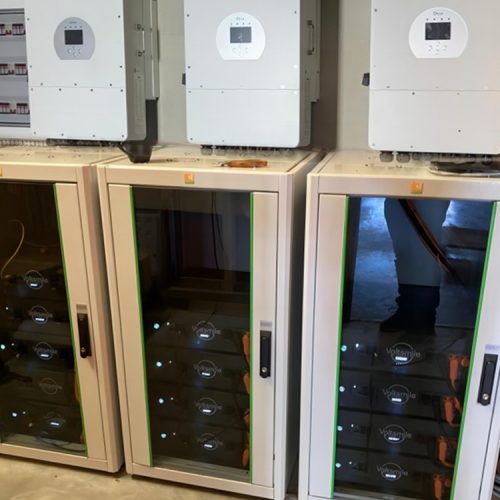
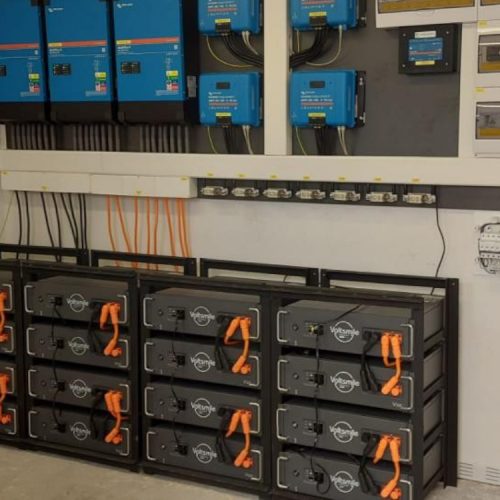
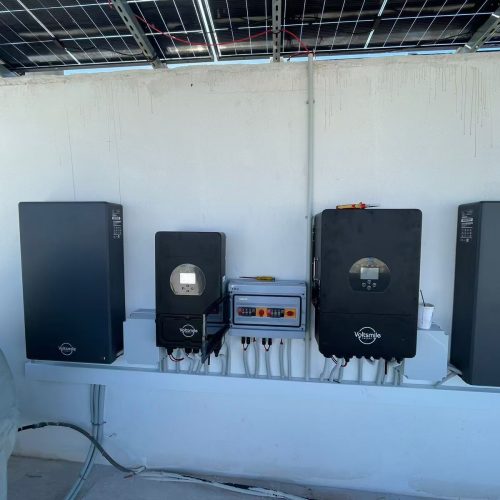
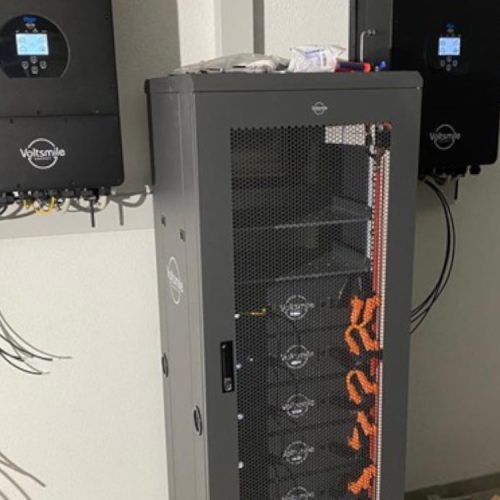
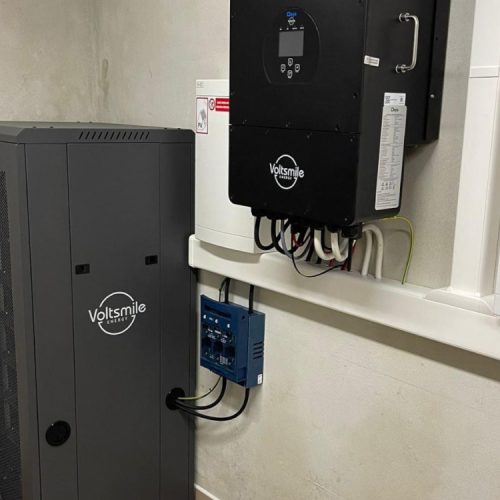
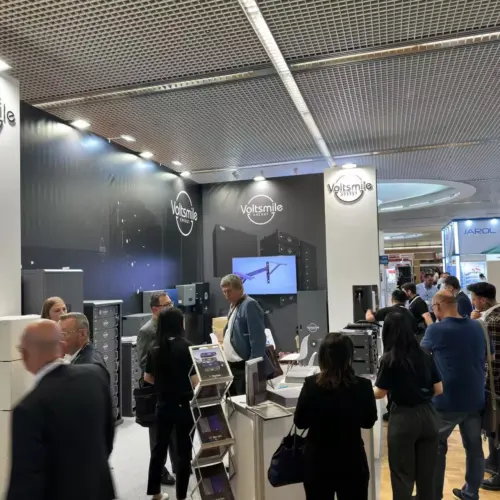
Voltsmile has positioned itself at the forefront of the customized outdoor battery storage market. The company offers comprehensive solutions for telecommunications, renewable energy integration, and industrial applications. Emergency backup power rounds out the portfolio. The company’s all-in-one cabinet approach integrates high-cycle-life LiFePO4 battery packs, advanced battery management systems, and hybrid inverter compatibility. A robust IP65-rated enclosure supports operation from -30°C to 60°C.
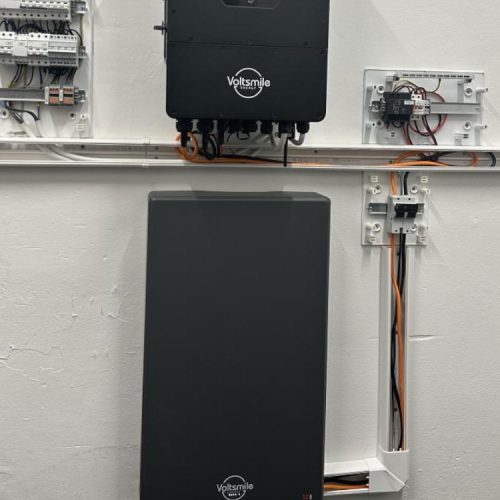
What distinguishes Voltsmile’s offering is the depth of customization available. Clients can specify battery chemistry and capacity. They can also choose voltage configurations and communication interfaces. Mounting options include wall-mounted, floor-standing, or mobile configurations. These depend on site constraints. The customization process follows a structured methodology. It begins with requirement analysis. Then comes design and engineering. Prototype testing follows. Finally, production with global logistics support completes the process.
Conclusão
The shift toward customized outdoor battery storage reflects a broader maturation. The energy storage industry is growing up. Customers no longer accept generic solutions that compromise on environmental resilience, safety, or scalability. Instead, they demand systems engineered for their specific climate and load profile. Operational constraints matter too. Whether the application is a remote telecom tower in the desert, a factory seeking peak shaving, or a microgrid serving an off-grid community, the right customized outdoor battery storage system delivers reliability, longevity, and measurable return on investment. As the market continues its rapid expansion, customization will remain the defining competitive advantage for manufacturers. It will also determine deployment success for end users.