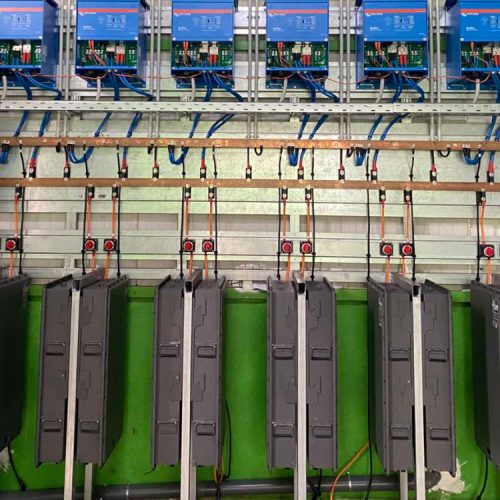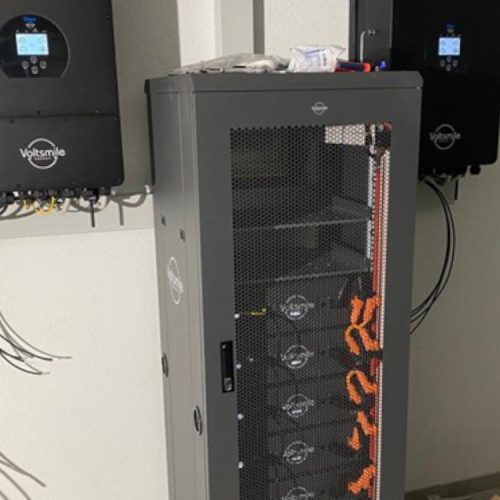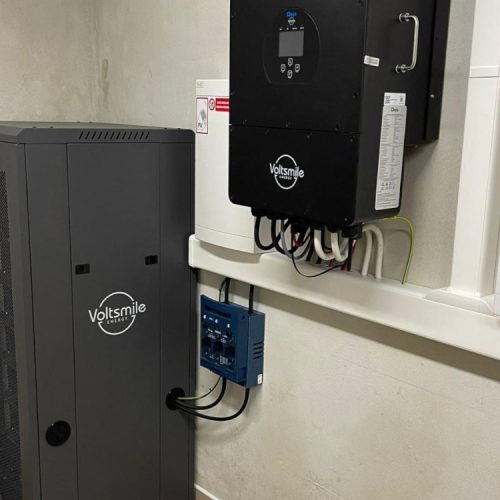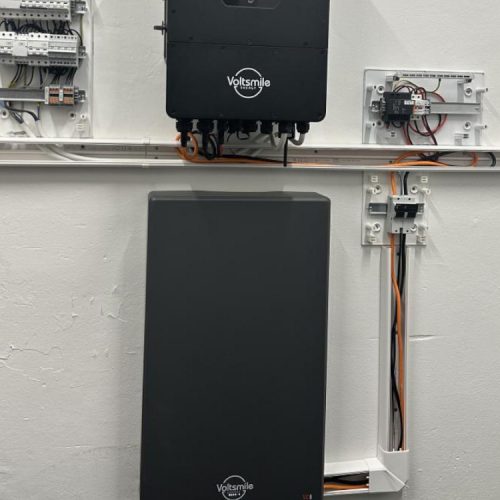


High Voltage ESS CE Compliant: Ensuring Safety and Compliance for Energy Storage Systems
Wprowadzenie
W szybko rozwijającej się branży magazynowania energii, High Voltage Energy Storage Systems (ESS) play a critical role in grid stability, renewable energy integration, and industrial applications. For companies like Voltsmile, ensuring Zgodność z normami CE is not just a regulatory requirement but also a mark of quality, safety, and market competitiveness. This article explores the importance of CE compliance for High Voltage ESS, key certification requirements, and how Voltsmile delivers safe, efficient, and compliant energy storage solutions.

Why CE Compliance is Essential for High Voltage ESS
The Oznaczenie CE indicates that a product meets the European Union’s health, safety, and environmental protection standards. For High Voltage ESS, compliance is crucial because:
- Legalny dostęp do rynku – Selling in the EU requires CE certification; non-compliant products face bans or recalls.
- Safety Assurance – High-voltage systems pose risks like electrical shocks, thermal runaway, and fire hazards. CE compliance ensures rigorous safety testing.
- Przewaga konkurencyjna – Customers prioritize certified products, enhancing brand trust and market positioning.
- Zabezpieczenie na przyszłość – Compliance aligns with evolving regulations, reducing risks of non-conformity penalties.
Key CE Directives & Standards for High Voltage ESS
To achieve CE compliance, High Voltage ESS must adhere to multiple EU directives and harmonized standards, including:
1. Low Voltage Directive (LVD) 2014/35/EU
- Ensures electrical safety for equipment operating between 50V AC and 1000V AC / 75V DC and 1500V DC.
- Key standards: EN 62619 (safety of lithium-ion batteries), EN 62133 (portable batteries), EN 62477-1 (power electronic converters).
2. Electromagnetic Compatibility (EMC) Directive 2014/30/EU
- Prevents electromagnetic interference (EMI) and ensures immunity to disturbances.
- Key standards: EN 61000-6-2 (immunity), EN 61000-6-4 (emissions).
3. Machinery Directive 2006/42/EC (if applicable)
- Applies if ESS includes moving parts or automated functions.
4. RoHS Directive 2011/65/EU
- Restricts hazardous substances (e.g., lead, mercury, cadmium).
5. Battery Regulation (EU) 2023/1542 (upcoming)
- New sustainability and safety requirements for batteries, including carbon footprint reporting.
Voltsmile’s Approach to CE-Compliant High Voltage ESS
Przy Voltsmile, we integrate compliance into every stage of ESS development:
1. Design & Engineering
- Safety-first architecture: Isolation, thermal management, and fault protection.
- Modułowa konstrukcja: Simplifies certification and maintenance.
2. Rigorous Testing & Certification
- Third-party lab testing for LVD, EMC, and environmental resilience.
- Failure mode analysis to mitigate risks like overcharging or short circuits.
3. Documentation & Technical File
- EU Declaration of Conformity (DoC) oraz Technical Construction File (TCF) prepared for authorities.
4. Ongoing Compliance Monitoring
- Regular audits and updates to align with new standards (e.g., EU Battery Regulation).
Benefits of Choosing Voltsmile’s CE-Compliant ESS
- Guaranteed EU Market Access – Hassle-free import and distribution.
- Zwiększone bezpieczeństwo i niezawodność – Reduced risk of failures or recalls.
- Sustainable & Future-Ready – Compliance with evolving green regulations.
- Global Recognition – CE marking is respected beyond Europe.
Wnioski
For businesses investing in High Voltage ESS, CE compliance is non-negotiable. Voltsmile’s commitment to safety, performance, and regulatory adherence ensures our systems meet the highest standards. Whether for industrial, commercial, or grid-scale applications, our CE-certified ESS solutions zapewniać peace of mind and long-term value.
Skontaktuj się z Voltsmile już dziś to learn how our High Voltage ESS can power your projects with full compliance and unmatched reliability.