

Solar Energy Storage System Technical: Core Components and Engineering Principles
Solar energy adoption keeps rising worldwide, so solar energy storage systems now sit at the center of the conversation. These intelligent devices store excess solar power for later use. Moreover, they help homeowners and businesses gain energy independence, cut electricity bills, and strengthen backup during outages. This article explores the technical foundations of modern solar energy storage systems, covering architecture, battery chemistry, thermal management, and emerging technologies.

Understanding Solar Energy Storage System Architecture
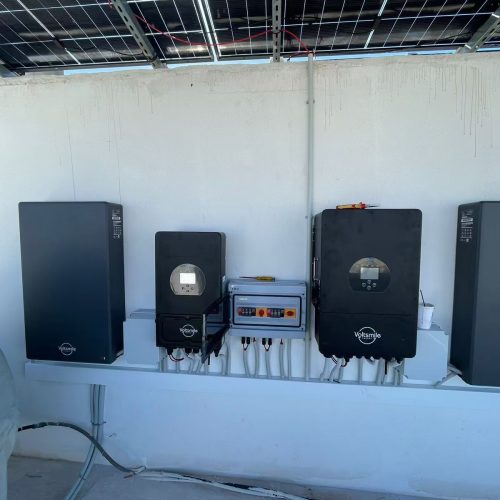
A solar energy storage system is more than “solar panels plus battery.” Instead, it integrates subsystems that determine performance, reliability, and lifecycle economics. The core components include the photovoltaic array, power conversion system, battery energy storage system, and energy management system.
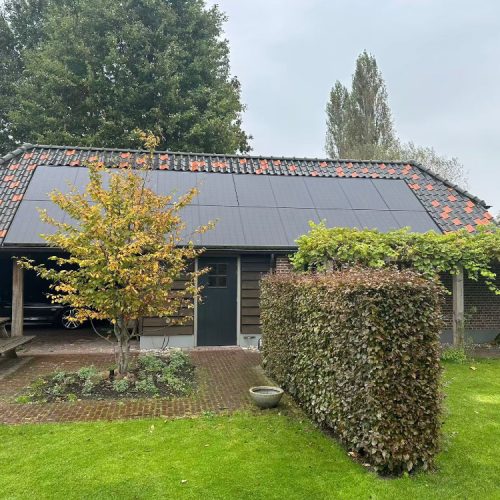
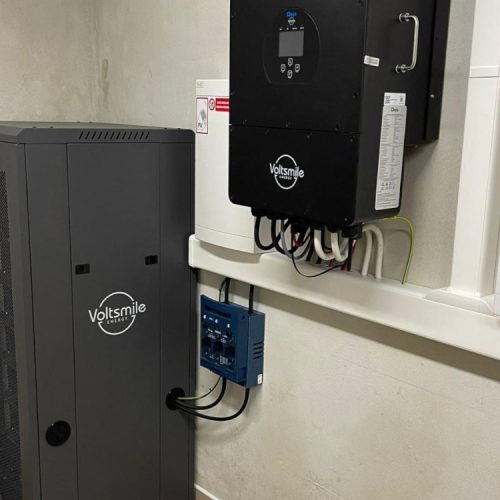
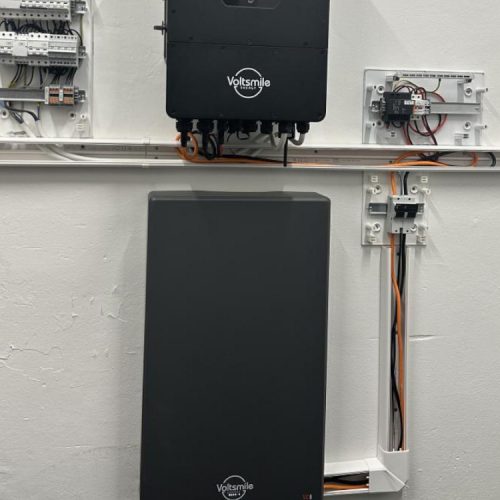
Solar panels absorb sunlight and convert it into direct current electricity. Then a hybrid inverter transforms that DC electricity into alternating current for homes and businesses. Meanwhile, any surplus electricity flows to the battery for future use. When solar production drops at night or in cloudy weather, the battery discharges to power appliances.
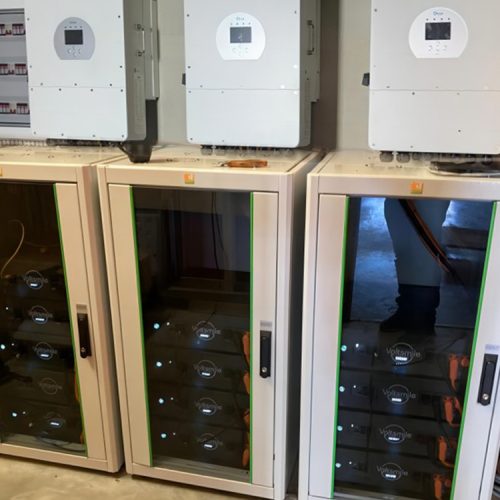
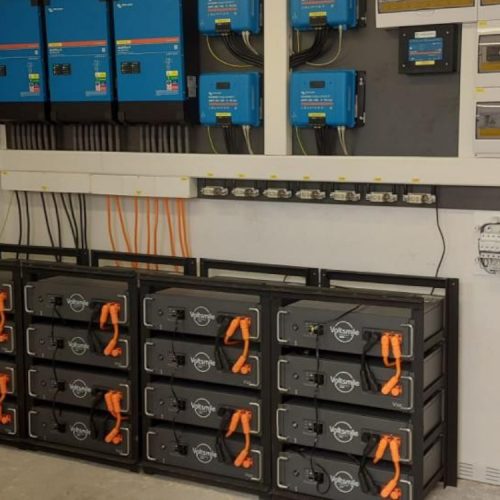
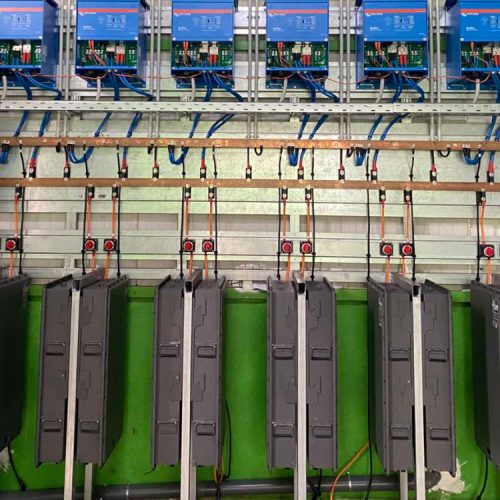
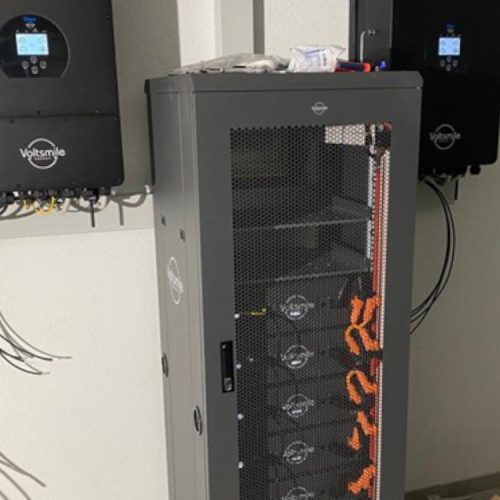
Modern solar storage systems fall into three hardware categories. First, modular stackable BESS serves commercial and industrial applications. Second, cabinet BESS provides pre-assembled enclosures for mid-sized installations. Finally, containerized BESS supports utility-scale projects exceeding 500 kW.
Battery Chemistry: Why LFP Dominates
Lithium iron phosphate batteries now dominate modern solar energy storage systems. Engineers overwhelmingly select LFP for its thermal stability and long cycle life of 6,000 to 10,000 cycles. Furthermore, LFP carries minimal exothermic chain reaction risk. Consequently, NMC and other chemistries are declining in stationary storage amid tougher safety constraints.
For business buyers and engineers, the LFP versus NMC decision rarely declares one chemistry universally better. Instead, it aligns technical characteristics with project priorities. LFP-based systems often balance safety and lifecycle cost well for commercial plants with daily cycling and high ambient temperatures. NMC may still suit severe space constraints requiring higher energy density, with added emphasis on enclosure design.
Thermal Management: The Core of Reliability
Temperature uniformity directly impacts cycle life and safety in solar battery systems. Forced air cooling offers a simple, low-cost solution for small to medium systems. However, it provides lower temperature uniformity. Liquid cooling has become mainstream for MW-class solar-plus-storage systems because it delivers excellent uniformity of ±1–3°C and extends battery lifespan significantly.
The Voltsmile VAULT 30 AIO System exemplifies advanced thermal management. Specifically, its intelligent air conditioning system maintains optimal battery temperature between 15°C and 25°C for peak efficiency and longevity.
Battery Management Systems and Safety Standards
A professional BESS includes multiple layers of battery management. These layers span module BMS, rack BMS, cluster BMS, and system BMS. Key communication standards include CAN, Modbus TCP, and IEC 61850 for utility SCADA integration. High-quality BMS ensures accurate state-of-charge calculation, fault isolation, and safe high-C-rate PV charging.
Safety certifications are critical for market access. In North America, UL 9540 represents complete energy storage system functional safety certification. Meanwhile, UL 9540A focuses specifically on fire safety and thermal runaway risk mitigation. The European CE system requires compliance with IEC/EN 62619 for battery safety and IEC/EN 62477 or IEC/EN 62109 for PCS safety.
Energy Management Systems and Smart Integration
The EMS layer defines the intelligence of modern solar storage systems. Advanced systems include AI-powered load forecasting that optimizes energy usage based on consumption patterns. Additionally, they offer real-time monitoring via Wi-Fi or 4G connectivity. They also provide predictive analytics to maximize savings.
Smart storage systems can use local weather data from online services to predict solar availability. Then they adjust charging strategies accordingly. By combining consumption data with wholesale electricity prices and weather forecasts, the battery determines optimal charging and discharging schedules. As a result, it maximizes solar utilization and minimizes grid import.
Emerging Technologies and Future Trends
The solar storage landscape continues to evolve rapidly. Sodium-ion batteries are emerging as a promising alternative. For instance, systems like those from Moonwatt use passively cooled NFPP sodium-ion cells. These cells achieve 93–94% solar-to-grid efficiency without lithium, cobalt, or active cooling. Second-life battery applications are also gaining traction. Specifically, EV batteries below 80% state of health still provide 1,500–3,000 cycles for residential solar storage at 40–60% lower cost than new cells.
Grid-forming capabilities represent another significant advancement. They enable energy storage systems to support grid stability through synchronous operation. Furthermore, they provide black start capability and wideband oscillation suppression.
Kesimpulan
Solar energy storage system technology has matured significantly. LFP chemistry, advanced thermal management, multi-layer BMS architecture, and intelligent EMS platforms now form the foundation of modern installations. As certification standards tighten and new chemistries emerge, selecting the right technical solution requires careful consideration of cycle life, safety requirements, thermal conditions, and long-term economics. Ultimately, Voltsmile remains committed to delivering cutting-edge energy storage solutions that empower users to harness solar energy efficiently and reliably.