

Lithium-Ion Battery Storage Technical: Core Components, Performance Metrics, and Operational Considerations
The global energy landscape now shifts toward renewable sources. Consequently, lithium-ion battery storage systems have become the cornerstone technology for bridging intermittent generation and reliable power delivery. For engineers and project developers evaluating storage solutions, understanding the technical architecture behind a battery energy storage system (BESS) remains essential. This knowledge ensures safety, longevity, and return on investment. This article examines the technical foundations of modern lithium-ion storage systems, from cell chemistry to system-level controls.

System Architecture: Beyond the Battery Cell
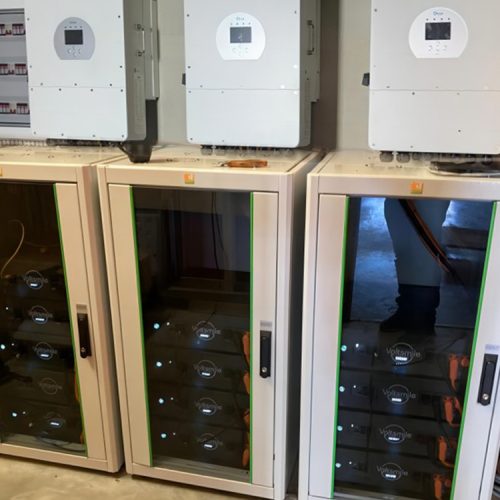
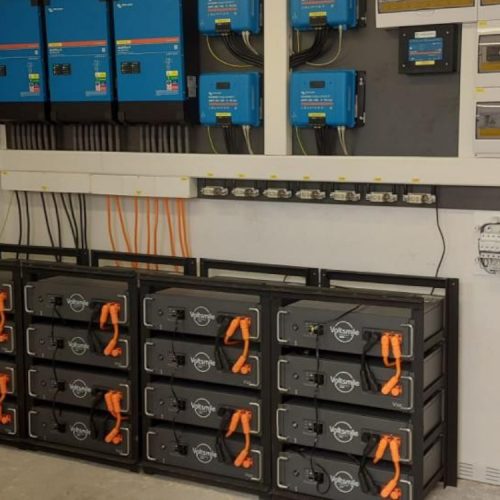
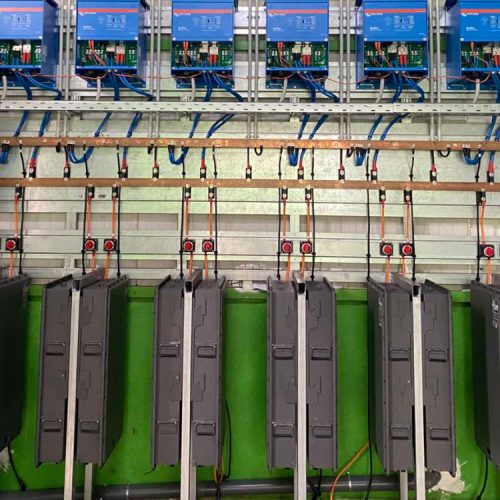
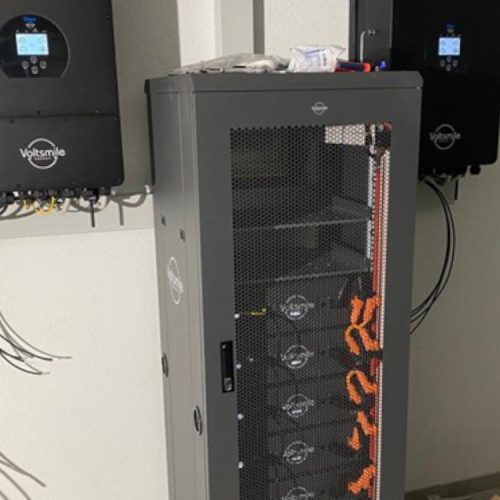
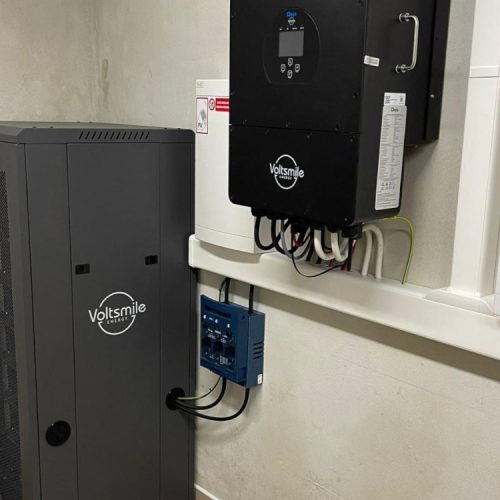
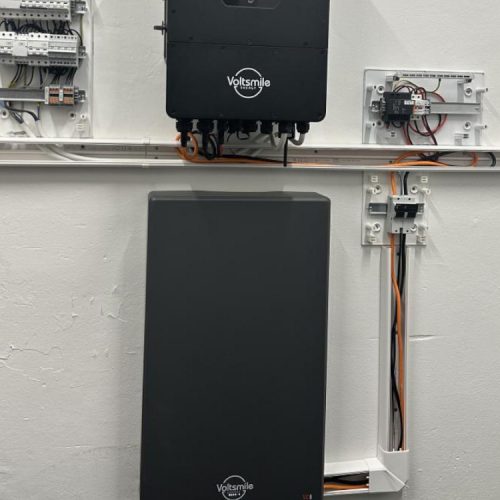
A common misconception holds that a battery storage system is simply a collection of battery cells. In reality, a complete BESS integrates multiple subsystems that work in concert. The battery itself—cells assembled into modules, modules into racks, and racks into containers—represents only the energy storage medium. The technical complexity lies in the supporting infrastructure. That infrastructure makes the system safe, efficient, and dispatchable.
The Battery Management System (BMS) serves as the neurological center of the installation. According to IEEE 2686-2024, the recommended practice for stationary energy storage applications, a BMS acts as a functionally distinct component. It protects the battery from operational modes that could compromise safety or longevity. This protection includes continuous monitoring of cell voltage, current, and temperature. Additionally, active balancing prevents cell drift that can strand usable capacity. Modern BMS architectures also incorporate state-of-charge estimation using advanced filtering methods such as Extended Kalman Filters. These filters prove particularly important for lithium iron phosphate (LFP) chemistries that exhibit flat voltage plateaus.
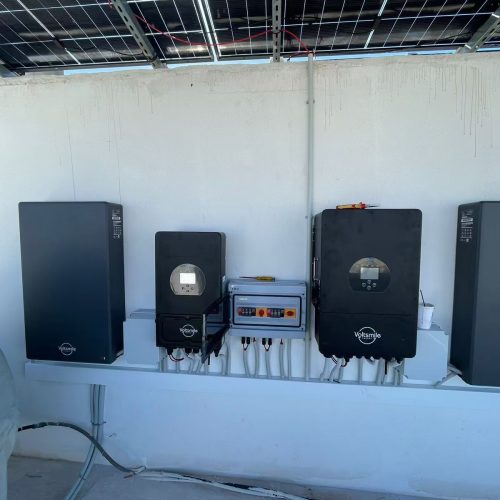
The power conversion system (PCS) determines what the installation can do electrically. Grid-following inverters synchronize to an existing voltage waveform and inject current. In contrast, grid-forming inverters establish voltage and frequency references themselves. This capability increasingly supports weak grids and islanded operation. In the United States, IEEE Std 1547-2018 governs interconnection. It mandates voltage and frequency ride-through capabilities and defined grid-support function categories.
Cell Chemistry Selection: LFP Versus NMC
The choice of cell chemistry profoundly affects system performance, safety, and economics. Grid-scale installations rely predominantly on two lithium-ion chemistries: nickel manganese cobalt oxide (NMC) and lithium iron phosphate (LFP).
NMC offers higher energy density, making it advantageous where footprint is constrained. However, LFP has captured the majority of the stationary storage market for several compelling technical reasons. LFP tolerates higher temperatures, resists thermal runaway more readily, and delivers more full cycles before usable capacity falls below contracted levels. Critically, LFP contains no cobalt, addressing both supply chain ethical concerns and cost volatility. For applications where daily cycling is expected over a ten-to-fifteen-year operational life, LFP’s superior cycle life and thermal stability typically outweigh the energy density penalty.
Performance Metrics That Matter
Evaluating a lithium-ion storage system requires looking beyond nominal capacity specifications. Several key performance indicators determine real-world value and operational reliability.
Round-trip efficiency (RTE) represents the ratio of energy discharged to energy charged. This ratio accounts for losses in the battery, inverters, transformers, and thermal management systems. A well-designed lithium-ion system achieves RTE in the 85 to 90 percent range. However, actual performance varies with site temperature, discharge duration, and cycling profile. When comparing supplier claims, it is essential to confirm the measurement point and assumed conditions. Laboratory figures may not reflect site performance.
State of Health (SoH) tracks capacity fade as a percentage of original capacity. Lithium-ion batteries degrade through two simultaneous pathways: calendar aging and cycle aging. Calendar aging depends on temperature and average state of charge. Cycle aging depends on depth of discharge and current rate. A system that begins life at 150 MWh may hold only 120 MWh by year seven. This reality makes SoH projections critical for financial modeling.
Availability measures the percentage of time the system can deliver rated power. This metric is subject to interpretation regarding when unavailability begins. It also depends on whether spare parts must be held on site for warranty validity. Real fleet availability data from suppliers provides more meaningful insight than contractual guarantees alone.
Safety Standards and Thermal Runaway Mitigation
Safety engineering for lithium-ion storage centers on preventing thermal runaway propagation. Industry standards such as NFPA 855 and UL 9540A address installation requirements and fire testing methodologies. The IEC 62933-5-4:2026 standard, published in May 2026, specifically establishes safety test methods and procedures for grid-integrated lithium-ion battery-based systems. It provides a framework for validating safety issues related to the battery subsystem.
In China, the T/CNESA 1016.1—2025 specification establishes safety grading requirements for lithium-ion battery storage systems exceeding 100 kWh. These requirements cover battery cells, modules, clusters, fire suppression, and electrical systems. The T/JSCN 001-2025 standard extends safety requirements to large-capacity electrochemical storage systems with discharge capacities exceeding 0.5 MWh. It encompasses site selection, installation, equipment, and emergency management.
Operational Optimization and Degradation Management
Every grid service a battery performs—frequency regulation, energy arbitrage, capacity supply—consumes cycle life. Dispatch optimization must therefore price calendar and cycle degradation alongside market revenue. Research on grid-connected battery systems under varying electricity market volatility demonstrates this trade-off quantitatively. In high-price-variability scenarios, batteries complete approximately 6,174 cycles over a 9.3-year lifetime. They perform two cycles per day on about 80 percent of operational days, compared to 6,143 cycles over 11.3 years in low-volatility scenarios. Despite the shorter lifetime, the high-volatility scenario achieves a net present value approximately 50 percent higher. It also achieves a payback period of 3.7 years versus 5.6 years.
This finding illustrates a fundamental principle. Maximizing battery longevity is not always equivalent to maximizing economic return. Modern energy management systems must therefore embed degradation models directly into scheduling algorithms. This integration balances revenue capture against asset longevity.
Következtetés
Lithium-ion battery storage technology has matured from a promising concept to a critical infrastructure component. The technical decisions—cell chemistry selection, BMS configuration, thermal management design, and dispatch optimization—collectively determine whether a storage project delivers its promised value. That value must materialize over a decade or more of operation. As standards continue to evolve and performance data from real installations accumulates, the industry is moving toward more sophisticated approaches to safety, degradation management, and grid integration. For project developers and asset owners, technical due diligence on these dimensions is not optional. It is the foundation of a bankable storage investment.