

Achieving CE Compliance for Solar Power Batteries: A Comprehensive Guide for Voltsmile Customers
The global transition to renewable energy accelerates every year. Consequently, solar power batteries have become indispensable components of modern energy systems. However, European customers consistently raise one question during procurement: Is this battery CE compliant? At Voltsmile, we understand that CE marking is not merely a regulatory checkbox. Instead, it is a gateway to the European market. Moreover, it represents a testament to product safety, quality, and environmental responsibility.

What Does CE Compliance Mean for Solar Power Batteries?
The CE mark indicates that a product meets high safety, health, and environmental protection requirements. Therefore, it enables free movement within the European Economic Area (EEA). For solar power batteries, CE compliance is not optional. It is a mandatory legal requirement under the EU’s regulatory framework. Specifically, Regulation (EU) 2023/1542 governs batteries and waste batteries across the European Union.
When a solar battery bears the CE mark, it signifies that the manufacturer has verified conformity with all applicable EU directives. For energy storage systems, this typically encompasses electromagnetic compatibility (EMC) and low voltage safety. Additionally, it covers restrictions on hazardous substances. Without CE marking, solar batteries simply cannot be legally placed on the European market.
The Evolving Regulatory Landscape: EU Battery Regulation 2023/1542
The European Union has significantly strengthened its battery regulations in recent years. Regulation (EU) 2023/1542 entered into force on August 18, 2023. Furthermore, it has applied since February 18, 2024. This regulation replaced the previous Batteries Directive 2006/66/EC as of August 18, 2025. Consequently, it introduced more stringent requirements for batteries sold in Europe.
For solar power battery manufacturers and importers, several key obligations are already in effect. First, batteries must demonstrate compliance with the updated regulatory framework through CE marking. Second, products must carry clear, accurate information regarding capacity, chemistry, and safety characteristics. Third, manufacturers bear responsibility for the collection, treatment, and recycling of waste batteries. These requirements apply to all batteries placed on the EU market. This includes lithium-ion solar storage systems commonly used in residential and commercial photovoltaic installations.
Future Compliance Milestones: What Solar Battery Buyers Should Know
The EU Battery Regulation introduces a phased implementation of additional requirements. Understanding these forthcoming obligations helps Voltsmile customers plan their procurement strategies effectively.
For rechargeable industrial batteries exceeding 2 kWh capacity, carbon footprint declarations will be required. Notably, this category includes many solar storage systems. These declarations must accompany batteries until February 18, 2027. After that point, they must be accessible via QR codes.
From February 18, 2027, all batteries must bear a QR code providing access to prescribed information. This includes capacity, chemistry, certain substances, and the EU declaration of conformity. Additionally, it covers end-user information on waste prevention and management. For industrial rechargeable batteries above 2 kWh, the QR code will provide access to the digital battery passport. This centralises model-specific data such as carbon footprint, recycled content, and durability parameters.
Disclosure requirements for cobalt, lead, lithium, and nickel content apply from August 18, 2028. Furthermore, minimum recycled-content percentages take effect from August 18, 2031.
Voltsmile’s Commitment to Compliance and Safety
Voltsmile approaches CE compliance not as a burden but as an integral component of product development. Our solar power batteries are engineered to meet the rigorous demands of European markets. Moreover, they incorporate safety features that align with regulatory requirements.
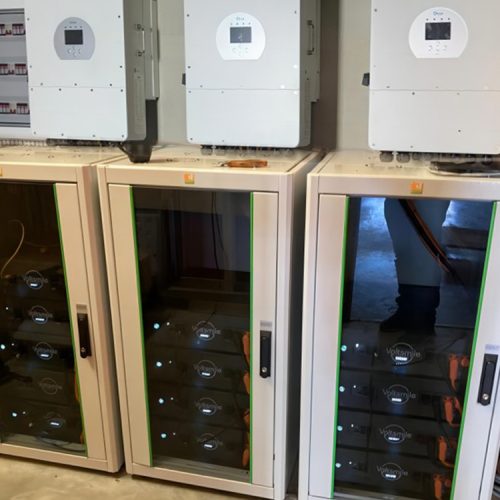
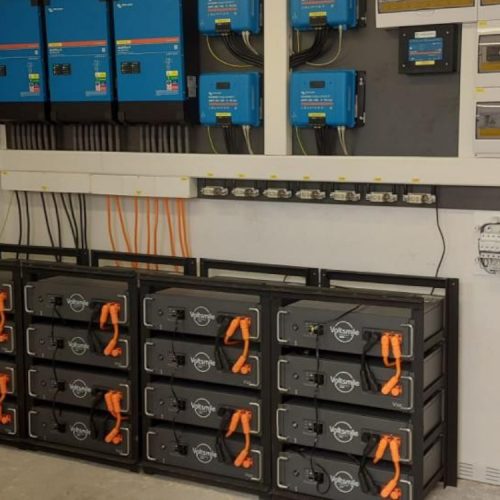
Our lithium iron phosphate (LiFePO4) battery systems represent the culmination of this commitment. Voltsmile products undergo rigorous quality control to ensure compliance with CE, RoHS, and other applicable international standards. The inherent thermal stability of LiFePO4 chemistry significantly reduces risks of thermal runaway, overheating, or combustion. As a result, it provides a foundation for safety that regulatory compliance alone cannot guarantee.
For customers seeking solar storage solutions, Voltsmile offers comprehensive documentation and technical support to demonstrate CE conformity. Our batteries are designed with the European market in mind. Consequently, they incorporate the labelling, safety features, and performance characteristics required for EEA market access.
Practical Considerations for CE-Compliant Solar Battery Selection
When evaluating solar power batteries for European installations, Voltsmile encourages customers to consider the following factors.
First, ensure the manufacturer provides a valid EU Declaration of Conformity and technical documentation supporting CE marking. Second, look for evidence of testing against relevant standards, such as IEC 62619 for industrial battery safety and IEC 62620 for performance requirements. Third, consider forthcoming requirements such as battery passports and carbon footprint declarations when making long-term procurement decisions. Selecting batteries from manufacturers prepared for these requirements avoids costly replacements or compliance gaps.
CE-compliant batteries must be installed and maintained according to manufacturer specifications. As Voltsmile documentation emphasises, trained professionals should handle installation. Furthermore, regular maintenance checks ensure continued safe operation.
Következtetés
For solar power batteries, CE compliance represents the intersection of regulatory obligation and product integrity. The European Union’s evolving battery regulation framework—anchored by Regulation (EU) 2023/1542—sets a high standard for safety, environmental responsibility, and transparency. Voltsmile remains committed to meeting and exceeding these standards. Therefore, our customers can deploy solar storage systems with confidence.
As the regulatory landscape continues to develop, Voltsmile will maintain its focus on compliance, quality, and customer support. For European customers seeking reliable, CE-compliant solar power batteries, Voltsmile represents a partner dedicated to powering a sustainable future—safely, legally, and responsibly.