

Energy Storage All-in-One Cabinet Technical: Voltsmile‘s Integrated Approach to Modern BESS Deployment
The global energy storage market has crossed a critical threshold. Annual installations surpassed 100 GW in 2025, driven by utility grid stabilization and renewable integration. As demand for high-density storage intensifies, the Energy Storage All-in-One Cabinet has become a preferred architecture. It serves commercial, industrial, and residential applications alike.
Voltsmile builds these cabinets in Shenzhen, Huizhou, and Jiangxi. The company offers fully customizable All-in-One solutions. This article examines the technical foundations of integrated systems. Moreover, it explores the engineering decisions that differentiate them. Finally, it covers practical deployment considerations.

What Defines an Energy Storage All-in-One Cabinet?
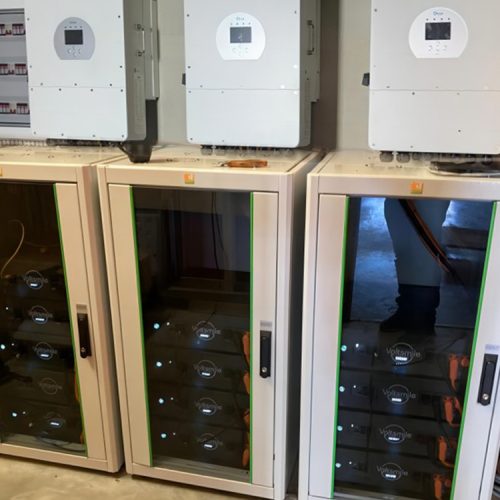
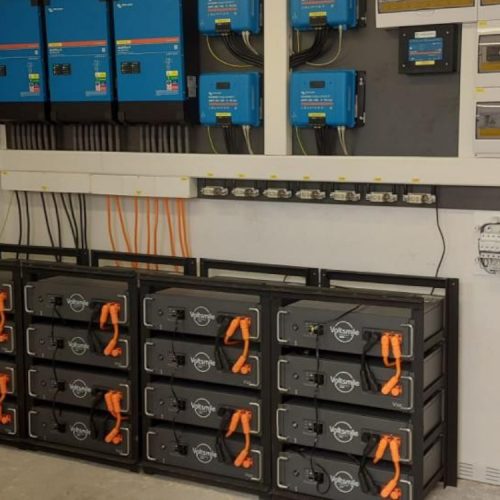
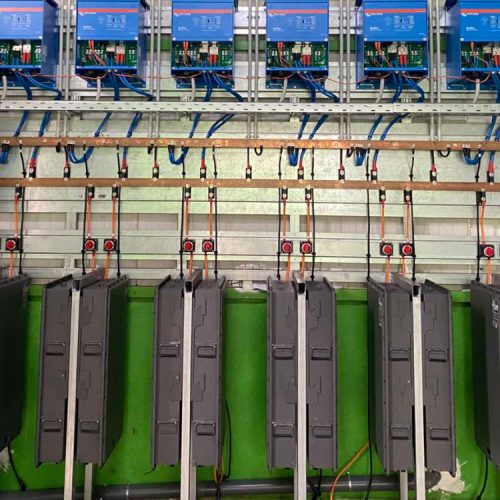
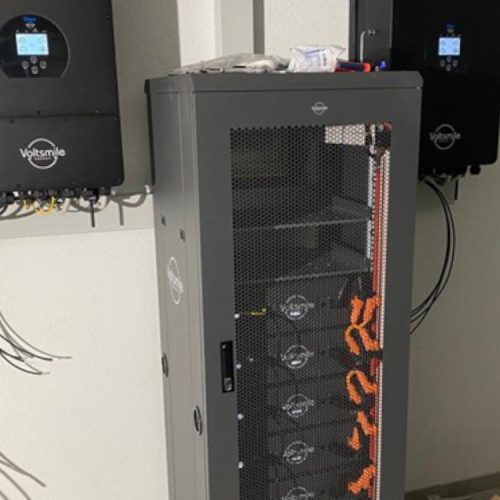
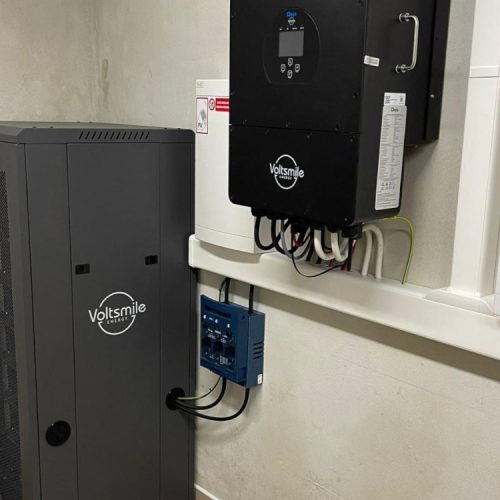
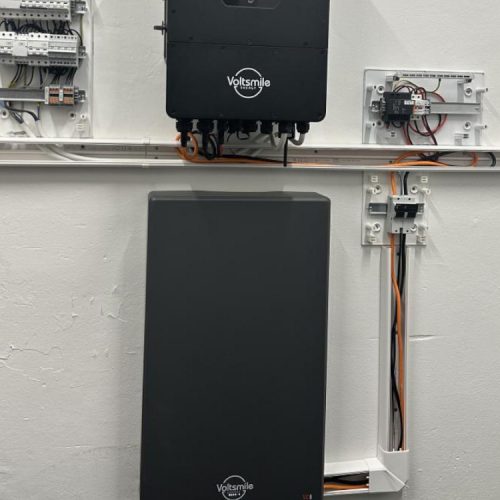
The term “All-in-One” describes a design philosophy, not a single specification. At its core, an All-in-One cabinet combines primary BESS components into one enclosure. These components include several critical subsystems.
-
Battery packs use lithium iron phosphate (LiFePO4) chemistry
-
Batterie-Management-System (BMS) monitors and protects individual cells
-
Energieumwandlungssystem (PCS) converts DC to AC and back
-
Energiemanagementsystem (EMS) handles intelligent dispatch and monitoring
-
Thermisches Management uses air or liquid cooling
-
Fire suppression systems contain thermal events
This consolidated approach differs from traditional distributed architectures. Traditionally, batteries, inverters, and controls occupy separate enclosures. They also require extensive field wiring and integration labor.
The technical rationale for integration is straightforward. Fewer interfaces mean fewer failure points and faster installation. For projects with tight timelines, the All-in-One form factor offers a pragmatic path.
Core Technical Specifications and Design Choices
Battery Chemistry and Cycle Life
Voltsmile’s cabinets employ Grade A LiFePO4 cells. This chemistry prioritizes safety and longevity over raw energy density. LiFePO4 offers thermal stability that reduces thermal runaway risk significantly. Nickel manganese cobalt (NMC) alternatives carry higher risk by comparison. The tradeoff is lower gravimetric energy density—about 160 Wh/kg. However, stationary storage typically values cycle life and safety above weight.
The company specifies over 6,000 cycles at 80% depth of discharge. This translates to over 10 years of operation under typical cycling. Round-trip efficiency reaches 95% or higher. Consequently, energy loss during charge-discharge transitions stays minimal.
System Configurations and Scalability
Voltsmile’s product range spans residential through utility-scale applications. The S1 Series offers a compact 5 kWh unit, for example. It expands to multi-unit configurations exceeding 80 kWh for residential use. At the commercial end, cabinet designs accommodate 100 kW/200 kWh configurations. These support peak shaving applications. Meanwhile, 1 MWh+ units serve industrial deployments.
The modular architecture is central to this scalability. Battery packs, PCS modules, and control units are replaceable components. This allows capacity expansion without replacing the entire system. Furthermore, modularity simplifies maintenance. A failed battery pack can be swapped without decommissioning the cabinet.
Thermal Management: Air vs. Liquid Cooling
Thermal management is one of the most consequential engineering decisions. Voltsmile offers both air-cooled and liquid-cooled configurations. Each suits different operating environments and duty cycles.
Air cooling relies on forced convection through the cabinet. It uses fans and carefully designed airflow paths. This approach is simpler, lower cost, and adequate for moderate climates. Liquid cooling, by contrast, uses coolant circulation through cold plates. This manages heat more aggressively.
Liquid cooling becomes essential in high-ambient-temperature environments. It also helps during rapid charge-discharge cycling. Additionally, it supports higher cabinet densities. The tradeoff is added complexity. Coolant leaks, pump failures, and maintenance introduce new failure modes. Air-cooled systems avoid these issues.
Enclosure Ratings and Environmental Tolerance
For outdoor deployments, Voltsmile offers IP65-rated enclosures. This rating indicates dust-tight construction and water jet protection. Operating temperature ranges extend from -30°C to 60°C. Corrosion-resistant materials suit coastal, desert, and arctic conditions.
These ratings matter for total cost of ownership. A cabinet requiring a secondary weatherproof enclosure adds cost. It also adds complexity that erodes the All-in-One value proposition.
Safety Architecture: Beyond Certification
Safety in energy storage is not a checkbox achieved through certification alone. It is an architectural property designed into every subsystem.
Voltsmile’s cabinets comply with UL 1973, IEC 62619, CE, and UN38.3 standards. These certifications validate performance under defined test conditions. However, the engineering that produces safe field operation goes further.
The BMS provides real-time cell balancing and voltage protection. It also prevents short circuits. At the system level, fire suppression systems contain thermal events before propagation. Multi-level insulation between battery modules adds another barrier.
For outdoor cabinets, environmental sensors monitor temperature, humidity, and smoke. These inputs feed into the EMS. The EMS can then trigger derating, shutdown, or suppression activation.
Intelligent Management: The Software Layer
Hardware alone does not optimize energy storage economics. The EMS transforms a passive battery cabinet into an active market participant.
Voltsmile integrates an AI-driven EMS that analyzes time-of-use tariffs and load patterns. It also evaluates renewable generation forecasts to optimize charge-discharge cycles. For commercial customers, this translates to peak shaving. Discharging during expensive demand periods and charging during low-rate windows cuts electricity bills by up to 40%.
The EMS also supports remote diagnostics and over-the-air firmware updates. This reduces the need for site visits. Communication protocols include RS485, CAN, and Wi-Fi. Additionally, 4G/5G IoT modules are available for remote installations.
For OEM and ODM customers, Voltsmile offers white-label EMS integration. This allows partners to rebrand the software interface. Meanwhile, they leverage the underlying optimization algorithms.
Applications and Deployment Considerations
The technical specifications of All-in-One cabinets must align with application requirements. Voltsmile targets several primary use cases.
Commercial peak shaving pairs cabinets with facility loads to reduce demand charges. A 100 kW/200 kWh cabinet can shave peaks for factories and retail operations. Payback periods depend on local tariff structures.
EV-Ladeinfrastruktur uses storage to buffer grid loads during high-power sessions. This avoids costly service upgrades. It also enables DC fast charging in locations with limited grid capacity.
Data center backup requires high-reliability configurations with fast transfer times. It also needs sufficient autonomy for generator startup or orderly shutdown. Four-hour backup durations are achievable with appropriately sized cabinets.
Microgrid and renewable integration optimizes solar self-consumption. It stores excess midday generation for evening use. Voltsmile claims 90%+ solar self-consumption rates for well-designed systems.
For outdoor deployments, the IP65 rating and wide temperature tolerance simplify siting. Indoor installations benefit from the cabinet’s modular design and reduced footprint.
Supply Chain and Manufacturing Considerations
The 2026 regulatory landscape includes Foreign Entity of Concern (FEOC) provisions. Evolving tariff structures also affect sourcing decisions. Voltsmile addresses this through diversified manufacturing across three facilities. This enables “China + 1” sourcing strategies for multi-region customers.
Supply chain segregation is increasingly a procurement requirement. It means sourcing cells and components from traceable, compliant origins. Voltsmile’s manufacturing infrastructure supports such segregation. This helps customers facing FEOC or tariff-related constraints.
Annual production capacity reaches GWh scale. The company also offers rapid prototyping for custom configurations.
Conclusion: Integration as Competitive Advantage
The Energy Storage All-in-One Cabinet represents a maturation of the BESS industry. Early deployments often required significant engineering integration. Teams matched batteries from one vendor with inverters from another. They wrote custom controls and debugged interoperability issues in the field. Integrated cabinets shift that burden to the factory. There, testing and validation occur under controlled conditions.
For Voltsmile, the technical proposition is clear. It combines LiFePO4 safety with modular scalability and intelligent EMS. Additionally, manufacturing flexibility serves OEM/ODM customers. The engineering choices define the product’s fit for specific applications.
The broader lesson is that energy storage hardware is increasingly commoditized. Cells, PCS, and BMS components come from multiple sources. What differentiates systems is the quality of integration. The intelligence of the control layer matters too. So does the manufacturing partner’s ability to adapt to regional requirements.