

Voltsmile Solar Power Battery Technical: The Complete Engineering Guide to LFP Storage Systems
Global demand for renewable energy storage accelerates every year. Solar power battery technical specifications now separate average systems from high-performance energy independence. Voltsmile leads this evolution through precision engineering and rigorous certification. Moreover, the company focuses singularly on Lithium Iron Phosphate (LiFePO4) chemistry. This technical deep-dive examines core parameters defining modern solar storage systems. Consequently, it reveals how Voltsmile’s engineering delivers measurable advantages across residential, commercial, and industrial applications.

Why Battery Chemistry Determines Everything
Every solar power battery technical evaluation begins with cell chemistry. Voltsmile exclusively uses prismatic LiFePO4 cells, prioritizing safety and longevity. This deliberate choice accepts marginally lower energy density than Nickel Manganese Cobalt (NMC) alternatives. However, the distinction is not academic. LFP chemistry possesses a superior thermal stability threshold. Therefore, the cells remain inherently non-combustible and eliminate thermal runaway risk. Homeowners and businesses gain a storage system safe for garages and living spaces. Furthermore, it operates without extensive fire suppression infrastructure.
Cycle life directly determines the economic viability of solar storage. Voltsmile’s prismatic LFP cells deliver over 6,000 to 8,000 cycles at 80% Depth of Discharge (DoD). In practical terms, this specification means daily cycles for over 15 years. Subsequently, the battery degrades to 80% of original capacity. This benchmark significantly lowers the Levelized Cost of Storage (LCOS) for end users. When evaluating solar power battery technical specifications, cycle life at defined DoD reliably predicts long-term value.
Core Technical Specifications That Matter
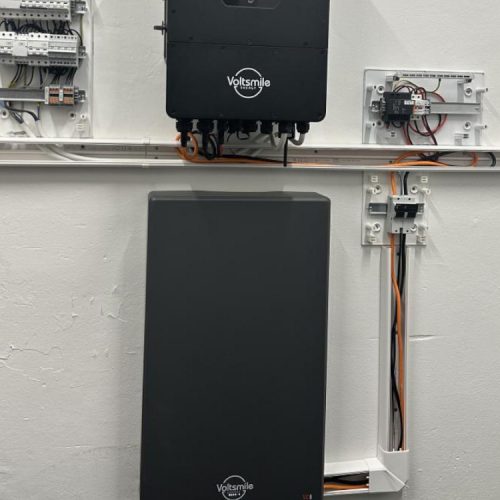
Voltsmile engineers its solar storage systems around a 51.2V nominal architecture. This voltage configuration has become the de facto standard for residential applications. The W1 model exemplifies the company’s technical approach with 200Ah rated capacity. Additionally, it provides 10,240Wh (10.24 kWh) of usable energy storage. This capacity rating is not theoretical. Instead, it reflects actual energy available under specified discharge conditions.
Wydajność w obie strony represents another critical parameter in solar power battery technical assessments. Voltsmile systems achieve 95% to 98% round-trip efficiency. Consequently, only 2% to 5% of energy is lost during cycling. Higher efficiency directly impacts system sizing. A 10 kWh battery with 98% efficiency delivers approximately 9.8 kWh of usable energy. In contrast, a competing system with 90% efficiency delivers only 9 kWh. Over a 15-year operational lifespan, this efficiency differential compounds into thousands of additional kilowatt-hours.
Depth of Discharge (DoD) defines how much total capacity users can safely utilize. Modern lithium systems, including Voltsmile’s product line, support 80% to 90% DoD operation. Therefore, users access the majority of stored energy without compromising cycle life. This contrasts sharply with legacy lead-acid technologies, which typically limit DoD to 50%. Consequently, lead-acid effectively halves the usable capacity of a comparably rated system.
Thermal Management and Environmental Resilience
Solar power battery technical specifications cannot be evaluated without examining thermal performance. Voltsmile integrates advanced thermal management systems, including liquid cooling and self-heating options. As a result, the batteries operate reliably across -20°C to 55°C. This wide temperature tolerance ensures consistent performance in diverse climates, from northern European winters to Australian summers.
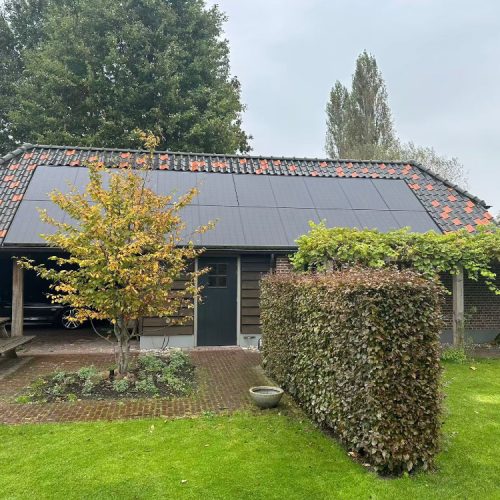
Thermal engineering extends beyond comfort range specifications. Lithium cells charge and discharge most efficiently within a narrow temperature band, typically 15°C to 35°C. Therefore, Voltsmile’s integrated liquid cooling system actively maintains cells within optimal thermal parameters. This prevents the accelerated degradation that occurs at temperature extremes. Field deployments in the Netherlands have demonstrated stable performance from -10°C winters to 45°C summers. Thus, this approach validates the effectiveness of active thermal management.
Scalability and System Integration
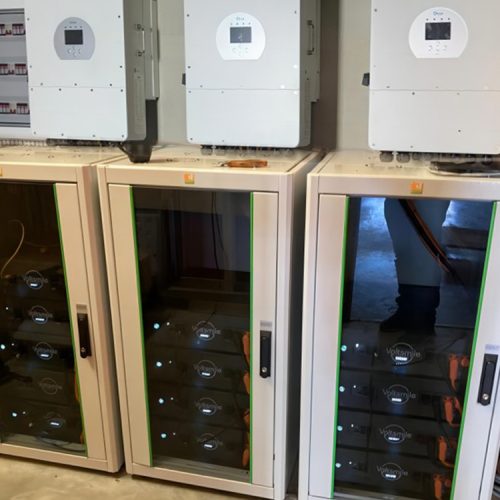
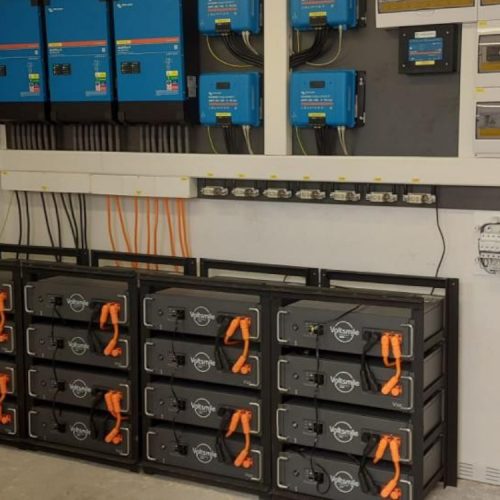
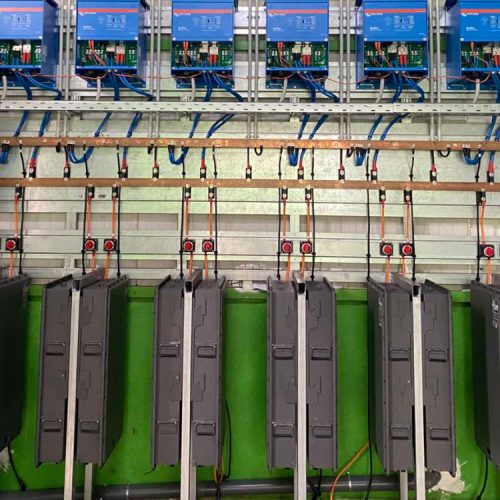
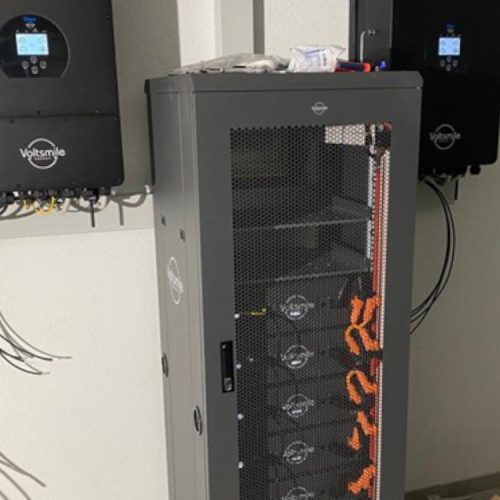
Voltsmile’s product architecture emphasizes modular scalability, allowing users to begin with 5 kWh or 10 kWh installations. Furthermore, they can expand to 40 kWh or more as energy needs evolve. The rack-mounted V10 model offers 51.2V and 5.12 kWh in a standard 19-inch form factor. Consequently, it enables seamless integration into existing equipment racks and modular stacking for capacity expansion.
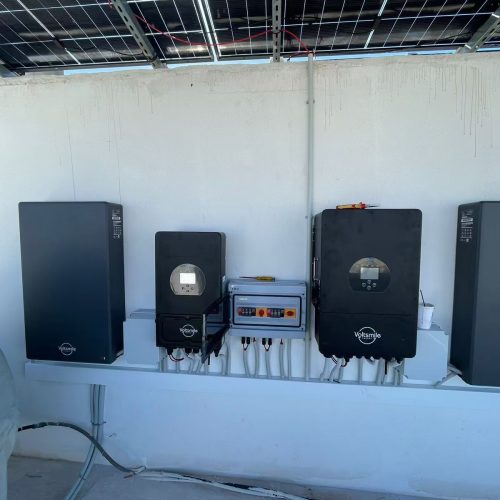
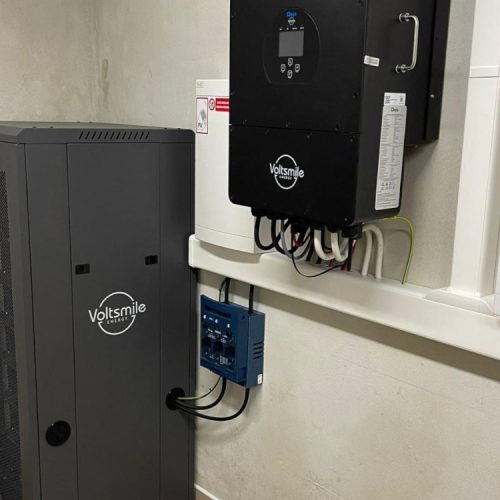
System integration flexibility extends to inverter compatibility. Voltsmile batteries are engineered for interoperability with major hybrid inverter platforms, including Deye and SolarEdge. Therefore, they facilitate both grid-tied and off-grid operational modes. The integrated Battery Management System (BMS) provides comprehensive protection against overcharge, over-discharge, and short-circuit conditions. Moreover, it continuously monitors cell-level parameters to optimize performance and safety.
Certification and Compliance: The Technical Validation Layer
Professional installers and discerning consumers ultimately validate solar power battery technical credibility through independent certification. Voltsmile’s LFP battery systems hold IEC 62619 certification, the international standard governing industrial lithium battery safety. The product line has undergone testing across a comprehensive range of configurations. These span from 10.24 kWh (C102) to 81.92 kWh (C819) systems. Consequently, they demonstrate consistent compliance across the entire capacity spectrum.
Electromagnetic compatibility certifications further underscore Voltsmile’s commitment to regulatory compliance. The W1 model carries CE marking under the Electromagnetic Compatibility Directive 2014/30/EU. Additionally, it has passed rigorous testing against EN IEC 61000 standards for emissions and immunity. These certifications are not merely administrative formalities. Instead, they represent verified engineering quality that reduces installation risk and ensures grid compatibility.
Conclusion: Engineering Storage for the Long Term
The solar power battery technical landscape is evolving rapidly. Emerging chemistries and architectures promise incremental improvements. Yet for most residential and commercial applications, LFP technology remains the optimal balance of safety, longevity, efficiency, and cost. Voltsmile’s engineering approach centers on prismatic LFP cells, sophisticated thermal management, and modular scalability. Consequently, it delivers a storage platform that performs reliably for over a decade with minimal degradation. For system designers and homeowners evaluating solar storage investments, these technical fundamentals matter far more than headline capacity figures. Therefore, prioritize verified engineering over transient price advantages.