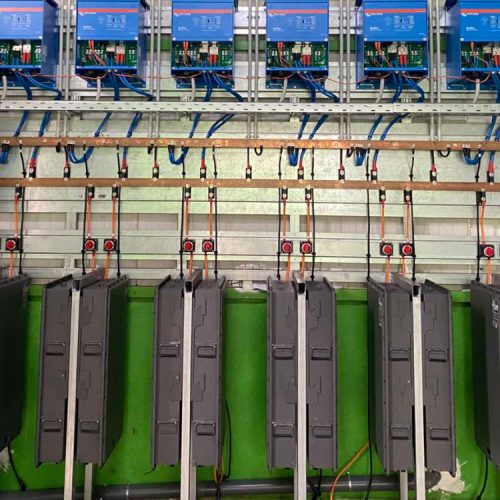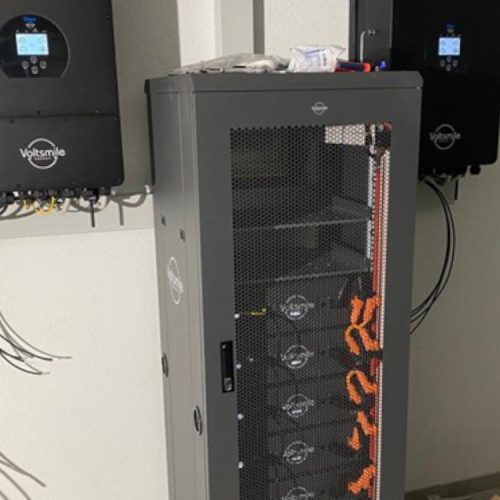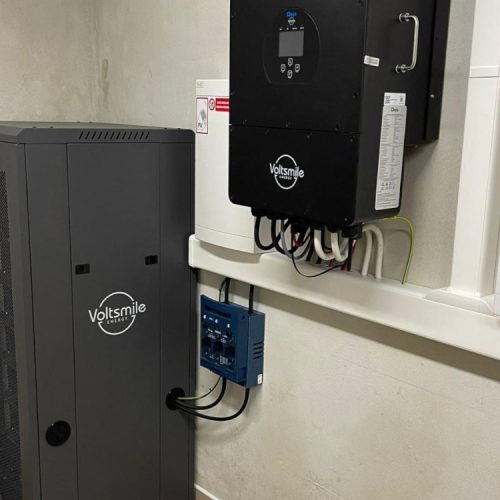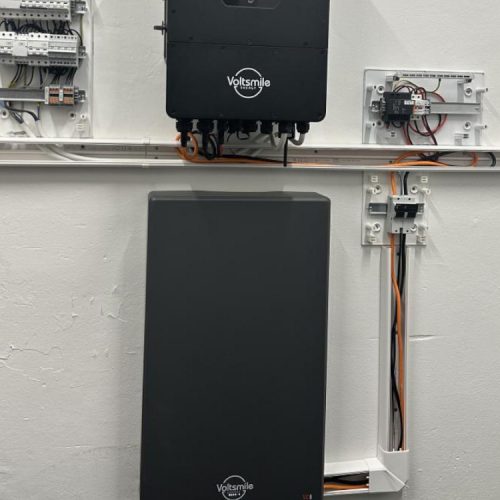


Off-Grid Battery & Solar Systems: The Ultimate Guide by Voltsmile
Introduction
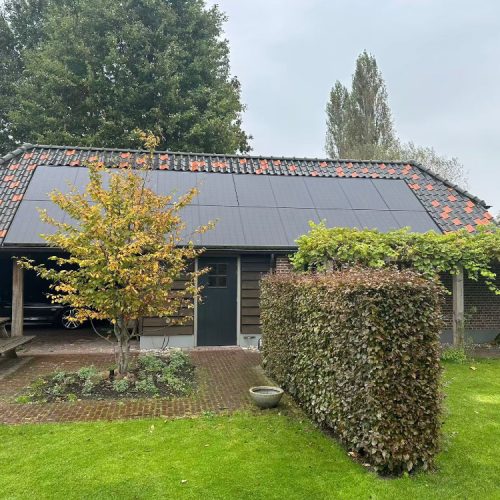
Off-grid solar systems paired with advanced battery storage are revolutionizing energy independence. Voltsmile's cutting-edge solutions empower homeowners, businesses, and remote communities to harness clean energy without reliance on traditional grids. This guide explores the components, benefits, and key considerations for off-grid solar systems, highlighting Voltsmile’s innovative technology.

1. What Is an Off-Grid Solar System?
An off-grid solar system operates independently from the utility grid, relying on:
- Solar panels convert sunlight into electricity.
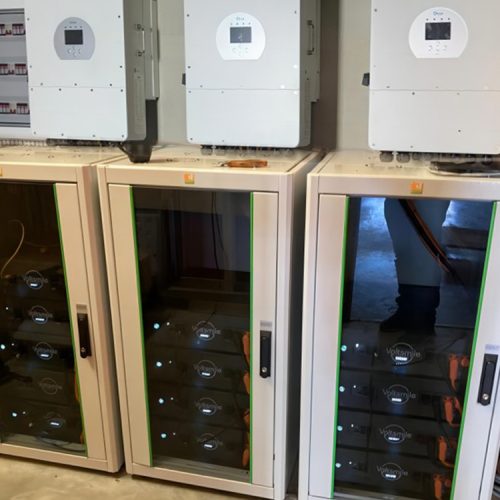
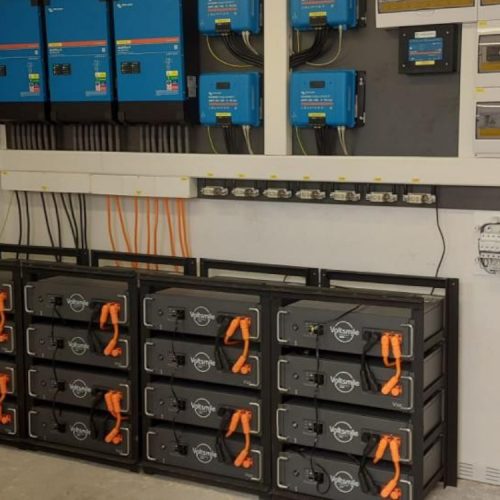
- Batteries (e.g., lithium-ion, lead-acid) to store excess energy.
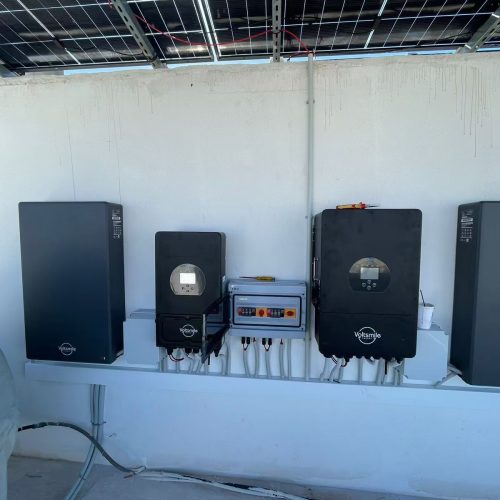
- Charge controllers to regulate battery charging.
- Inverters convert DC power to AC for appliances.
Voltsmile’s systems integrate high-efficiency components for a seamless 24/7 power supply.
2. Key Benefits of Off-Grid Solar + Battery Storage
Indépendance énergétique
Eliminate utility bills and avoid grid outages—critical for remote areas or emergencies.
Durabilité
Reduce carbon footprints with 100% renewable energy.
Économies de coûts
Long-term ROI offsets upfront costs, especially with Voltsmile’s durable lithium batteries (10+ year lifespan).
Évolutivité
Modular designs allow system expansion as energy needs grow.
3. Voltsmile’s Advanced Off-Grid Battery Solutions
Voltsmile specializes in high-performance batteries tailored for off-grid use:
Piles au lithium-ion
- Higher depth of discharge (DoD) vs. lead-acid.
- Compact, lightweight, and maintenance-free.
- Ideal for frequent cycling (e.g., daily solar charging).
Systèmes intelligents de gestion des batteries (BMS)
- Protects against overcharge/over-discharge.
- Enhances safety and longevity.
Hybrid Compatibility
Pair with generators or wind turbines for backup redundancy.
4. Designing Your Off-Grid System
Step 1: Calculate Energy Needs
Audit appliance wattage and daily usage (e.g., fridge: 1.5kWh/day).
Step 2: Solar Panel Sizing
Match panel capacity (e.g., 5kW array) to location’s sun hours.
Step 3: Battery Bank Capacity
Voltsmile recommends 2–3 days of autonomy (e.g., 20kWh storage for 10kWh/day usage).
Step 4: Inverter Selection
Choose pure sine wave inverters for sensitive electronics.
5. Maintenance & Optimization Tips
- Batteries: Keep at 20°C–25°C; monitor charge levels.
- Panels: Clean quarterly to maintain efficiency.
- Software: Use Voltsmile’s monitoring apps for real-time diagnostics.
Conclusion
Off-grid solar systems with Voltsmile’s batteries offer unmatched reliability, sustainability, and cost-efficiency. Whether for cabins, RVs, or full-home setups, our solutions are engineered for peak performance.