

Residential Energy Storage in China: Market Trends, Opportunities, and Future Outlook
Introducción
China’s residential energy storage market is experiencing unprecedented growth, driven by rising electricity costs, government incentives, and increasing environmental awareness. As a global leader in renewable energy adoption, China presents vast opportunities for companies like Voltsmile to innovate in residential battery storage solutions.

1. The Growing Demand for Residential Energy Storage in China
1.1 Aumento del coste de la electricidad e independencia energética
- Chinese households face increasing electricity tariffs, making solar + storage solutions economically attractive.
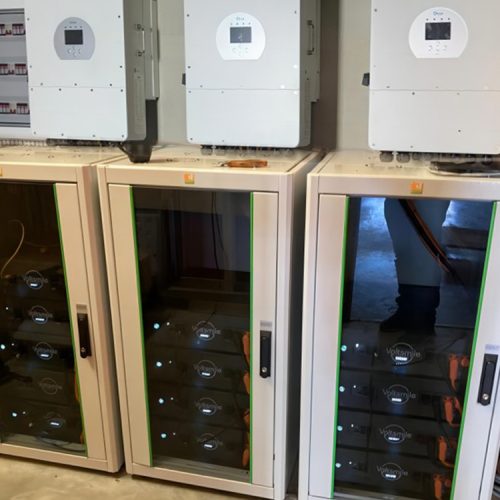
- Energy storage systems (ESS) enable homeowners to store excess solar power for nighttime or peak-hour usage, thereby reducing their reliance on the grid.
1.2 Políticas gubernamentales e incentivos
- China “Dual Carbon” goals (carbon peak by 2030, carbon neutrality by 2060) accelerate renewable adoption.
- Subsidies for distributed solar PV + storage in provinces like Guangdong, Jiangsu, and Zhejiang.
- FIT (Feed-in Tariff) reductions encourage homeowners to adopt self-consumption models.
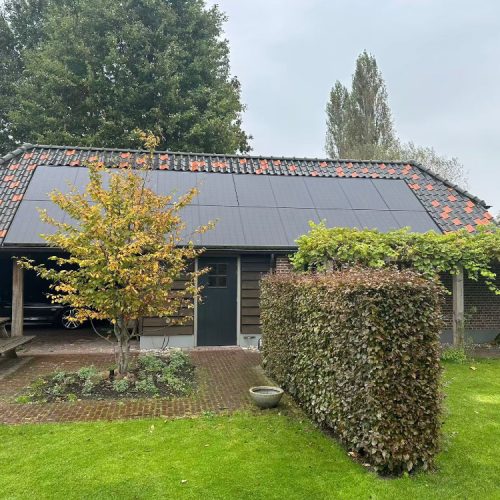
1.3 Increasing Adoption of Solar Rooftop Systems
- Residential solar installations surged by 40% YoY in 2024, boosting demand for compatible storage solutions.
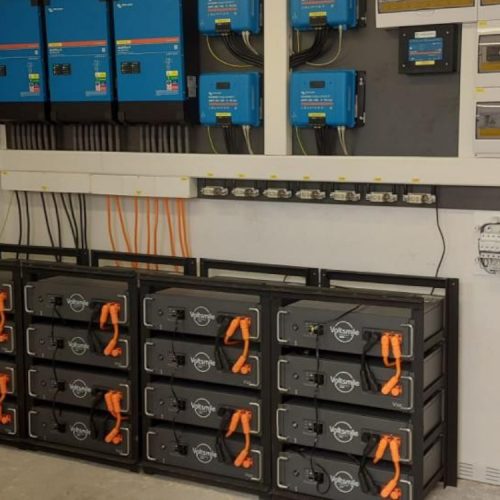
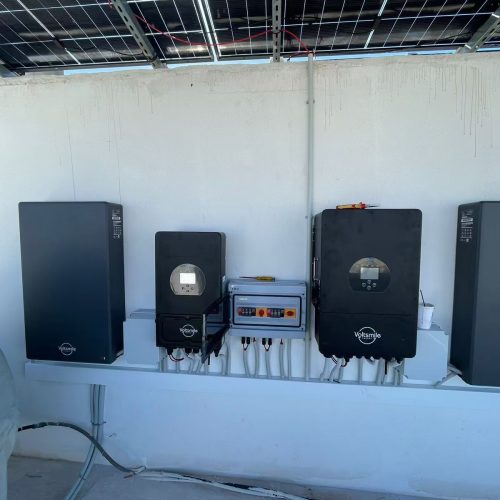
- Hybrid inverters and Baterías LiFePO4 dominate the market due to safety and longevity.
2. Key Players & Competitive Landscape
China’s residential energy storage market is highly competitive, with both domestic and international brands vying for dominance:
2.1 Leading Chinese Brands
- BYD – A pioneer in LiFePO4 battery technology, offering modular home storage systems.
- CATL – Supplies high-density batteries for residential and commercial applications.
- Huawei FusionSolar – Integrates smart energy management with AI-driven optimization.
2.2 International Competitors
- Tesla Powerwall – Popular among high-end consumers but faces localization challenges.
- LG Chem & Sonnen – Strong in premium segments but struggle with pricing competitiveness.
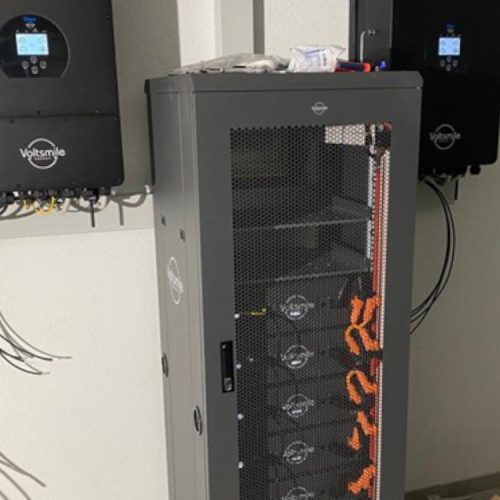
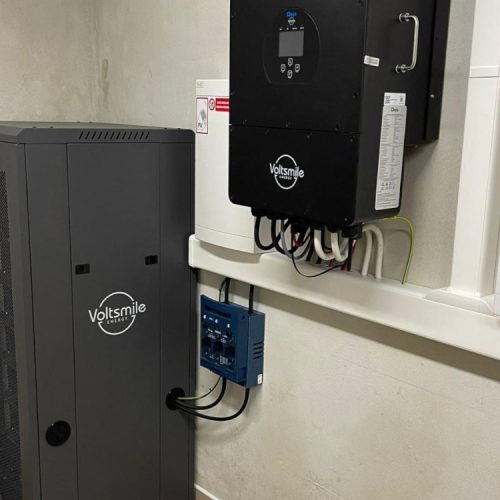
2.3 Voltsmile’s Market Opportunity
- Cost-effective solutions tailored for middle-income households.
- Gestión inteligente de la energía with IoT integration for real-time monitoring.
- Localized supply chains ensure faster deployment and maintenance.
3. Technological Advancements in Residential ESS
3.1 Lithium Iron Phosphate (LiFePO4) Dominance
- Safer than NMC batteries, with longer cycle life (6,000+ cycles).
- Ideal para high-temperature climates prevalent in Southern China.
3.2 AI & IoT Integration
- Predictive energy management optimizes self-consumption.
- Mobile app controls allow users to track savings and adjust settings remotely.
3.3 Virtual Power Plants (VPPs) & Grid Services
- Residential ESS can participate in programas de respuesta a la demanda, earning homeowners additional income.
- Pilot VPP projects in Shenzhen and Shanghai show promising scalability.
4. Challenges & Barriers to Adoption
4.1 High Initial Costs
- Despite falling battery prices, upfront investment remains a hurdle for many households.
- Financing models (leasing, PPA) are emerging to improve accessibility.
4.2 Regulatory & Grid Integration Issues
- Lack of standardized policies across provinces creates uncertainty.
- Grid interconnection delays slow down system deployments.
4.3 Consumer Awareness & Trust
- Many homeowners remain unaware of long-term savings from ESS.
- Certifications (CNCA, CQC) are crucial to building market confidence.
5. Future Outlook & Strategic Recommendations for Voltsmile
5.1 Market Expansion Strategies
- Target Tier 2 & 3 cities where solar adoption is rising but storage penetration is low.
- Partner with local installers to enhance distribution networks.
5.2 Product Innovation
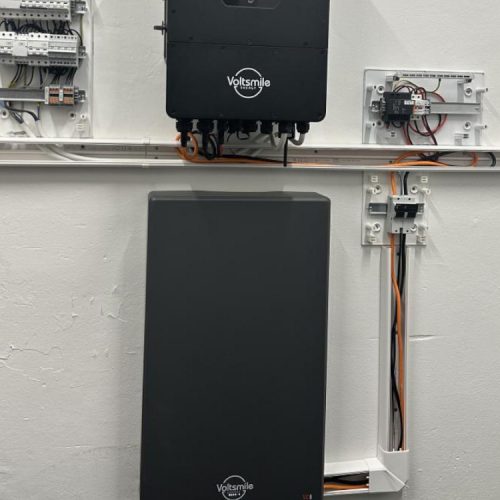
- Scalable battery systems (5kWh–20kWh) to cater to diverse household needs.
- Hybrid inverters with backup power for regions with unstable grids.
5.3 Policy Advocacy & Industry Collaboration
- Engage with policymakers to streamline ESS regulations.
- Collaborate with solar developers for bundled solutions.
Conclusión
China’s residential energy storage market is poised for exponential growth, fueled by rising energy costs, supportive policies, and technological advancements. Empresas como Voltsmile can capitalize on this trend by offering affordable, smart, and reliable storage solutions tailored to Chinese consumers. By focusing on localized strategies, consumer education, and policy engagement, Voltsmile can establish itself as a key player in this booming sector.